In an earlier post, Heroes Warriors and Worthies, we took a look at the naming of the Court Cards in French playing card decks and how these have been incorporated into Dame Fortune’s Tarot Wheel.
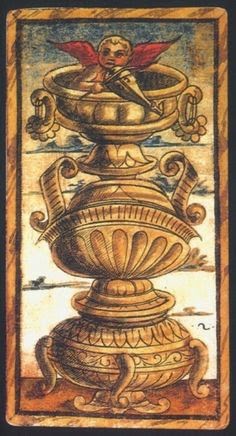
Another deck that incorporates named court cards is the Sola Busca Tarot.
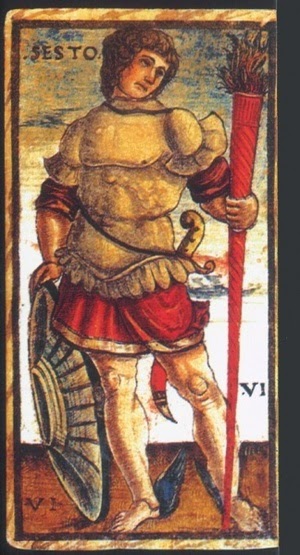
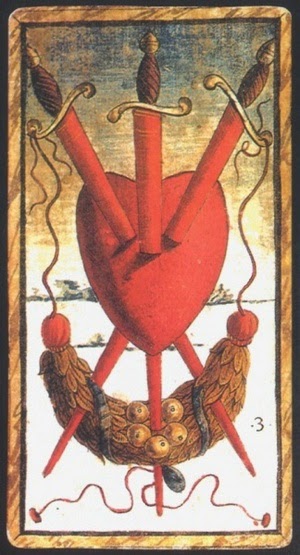
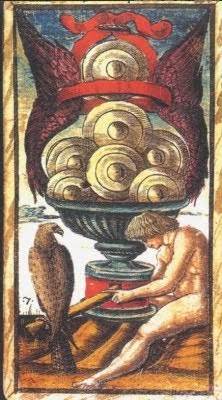
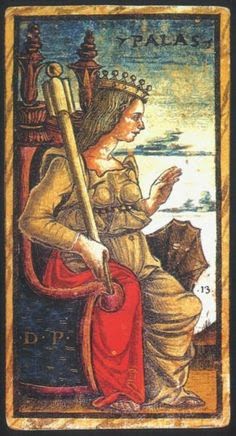
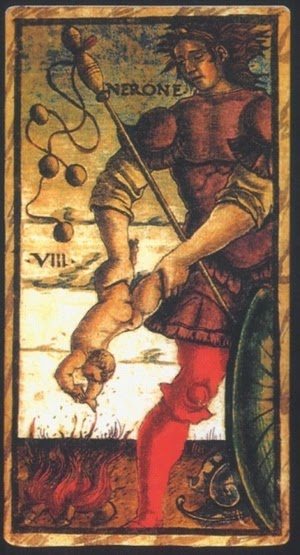
This deck originated in Italy during the late 15th Century and is quite different from other Tarocchi decks in that it is entirely populated by warriors (with exception of the Court Queens). The Majors are all named. The Fool remains Il Mato (the Fool) but all else are whirled into a vortex of classical names ….Nerone (Nero), Catulo (Cattulus), Catone (Cato… no, not the Pink Panther one) and so on.
The images in this deck are richly coloured and brooding in their mood.
This deck is very important indeed, in that it has clearly formed the basis for the Rider Waite Smith deck.
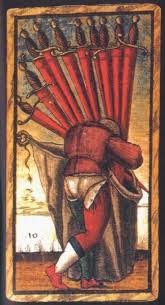
As was the habit, the little Pages are not named – because in gaming decks there were only 3 court cards.
We have:
King of Swords – Alexandro M
Queen of Swords – Olimpia
Knight of Swords – Amone
King of Staves – L Evio Plauto R
Queen of Staves – Pallas
Knight of Staves – Apolino
King of Cups – Lucio Cecilio R
Queen of Cups – Polisena
Knight of Cups – Natanabo
King of Coins – R Filipio
Queen of Coins – Elena
Knight of Coins – Sarafino
The names have some affinity with the Heroes, Warriors and Worthies, as previously looked at here on m’blog.
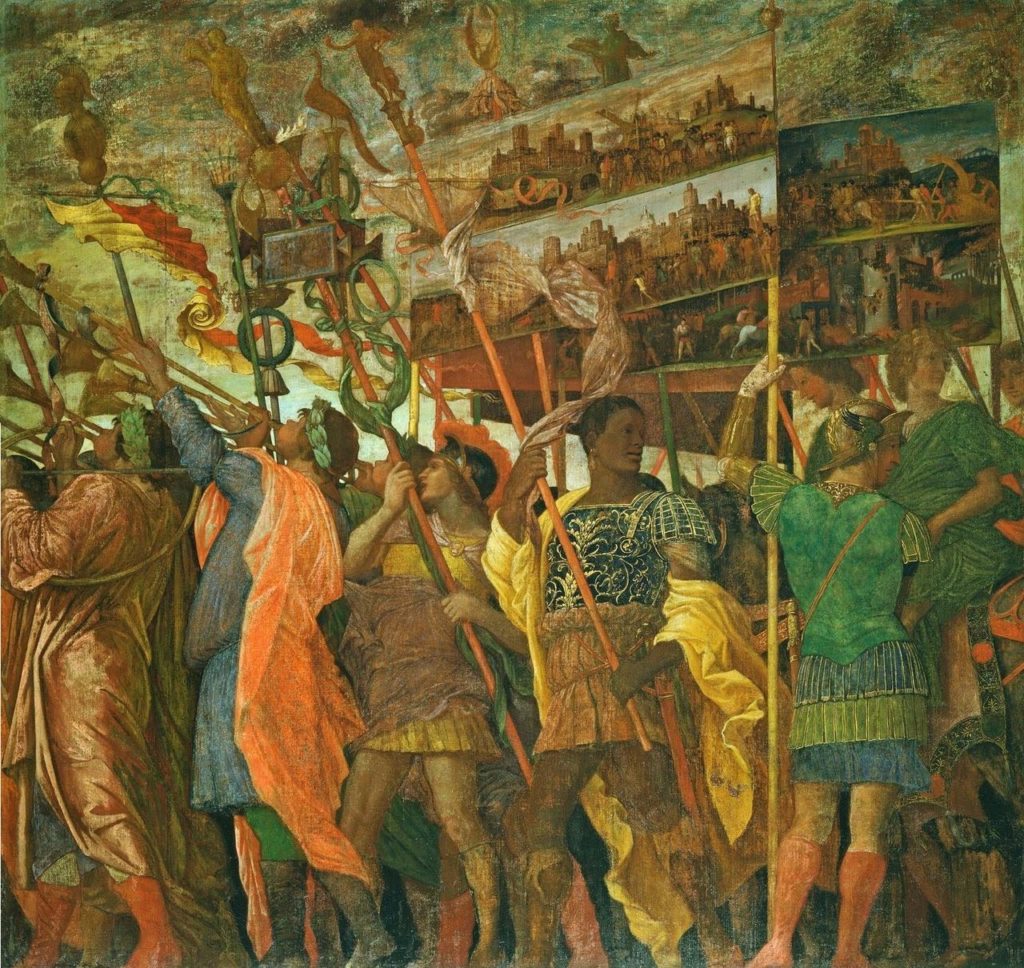
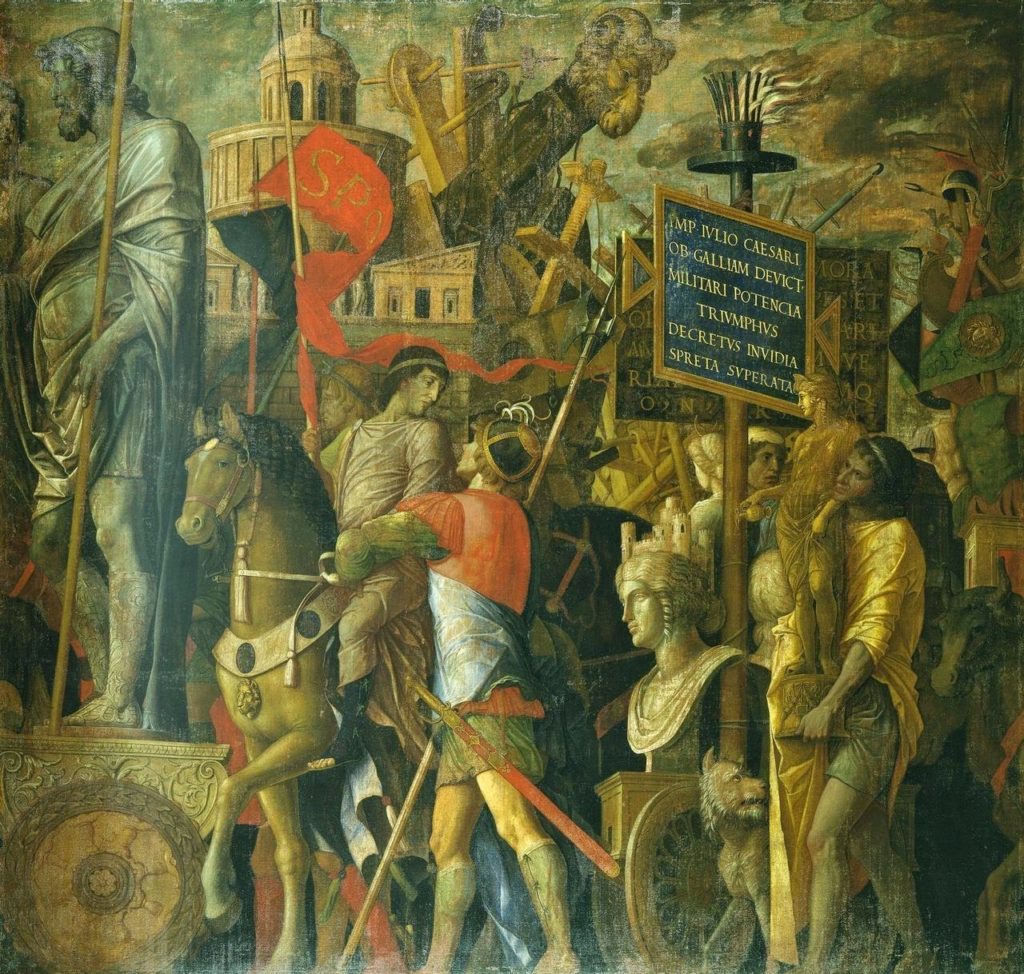
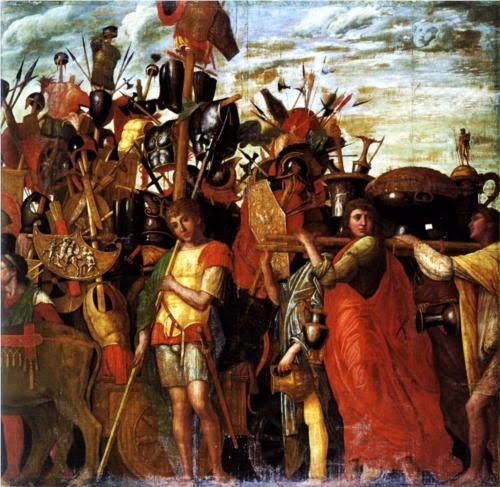
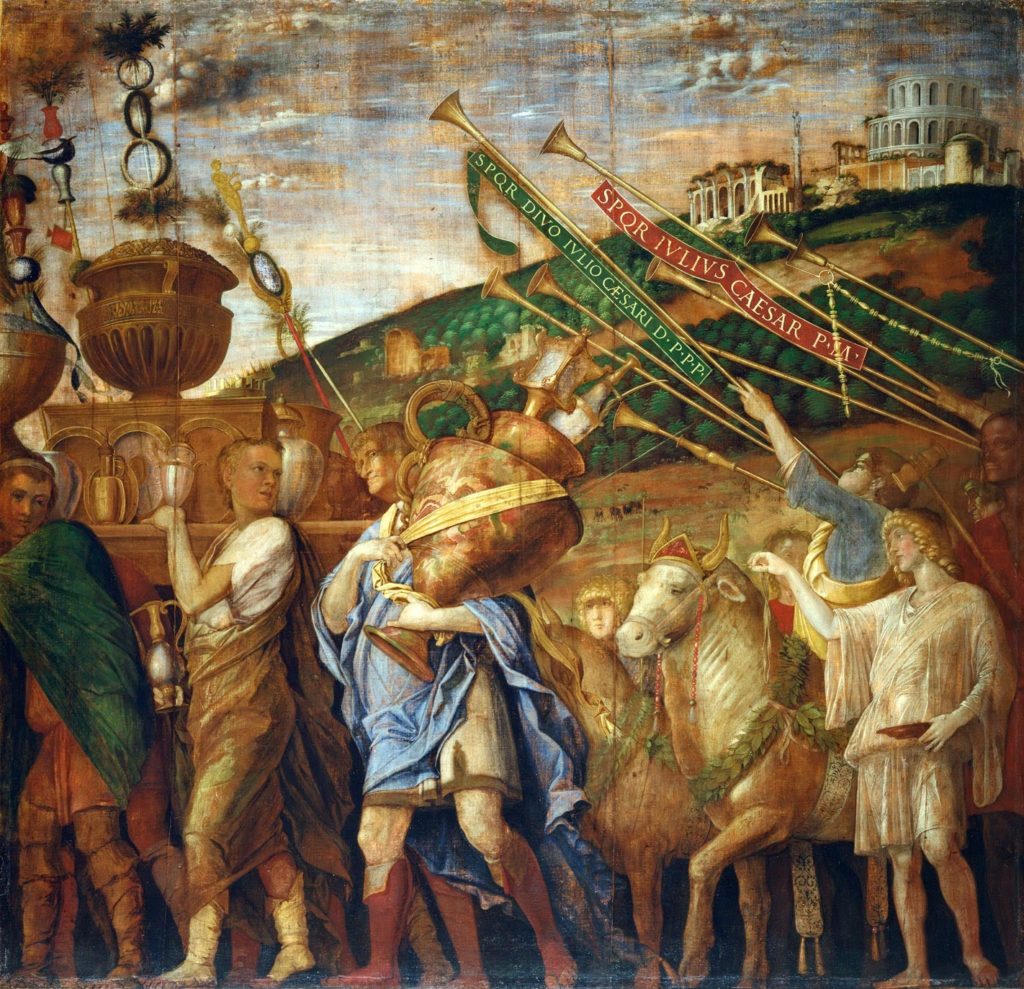
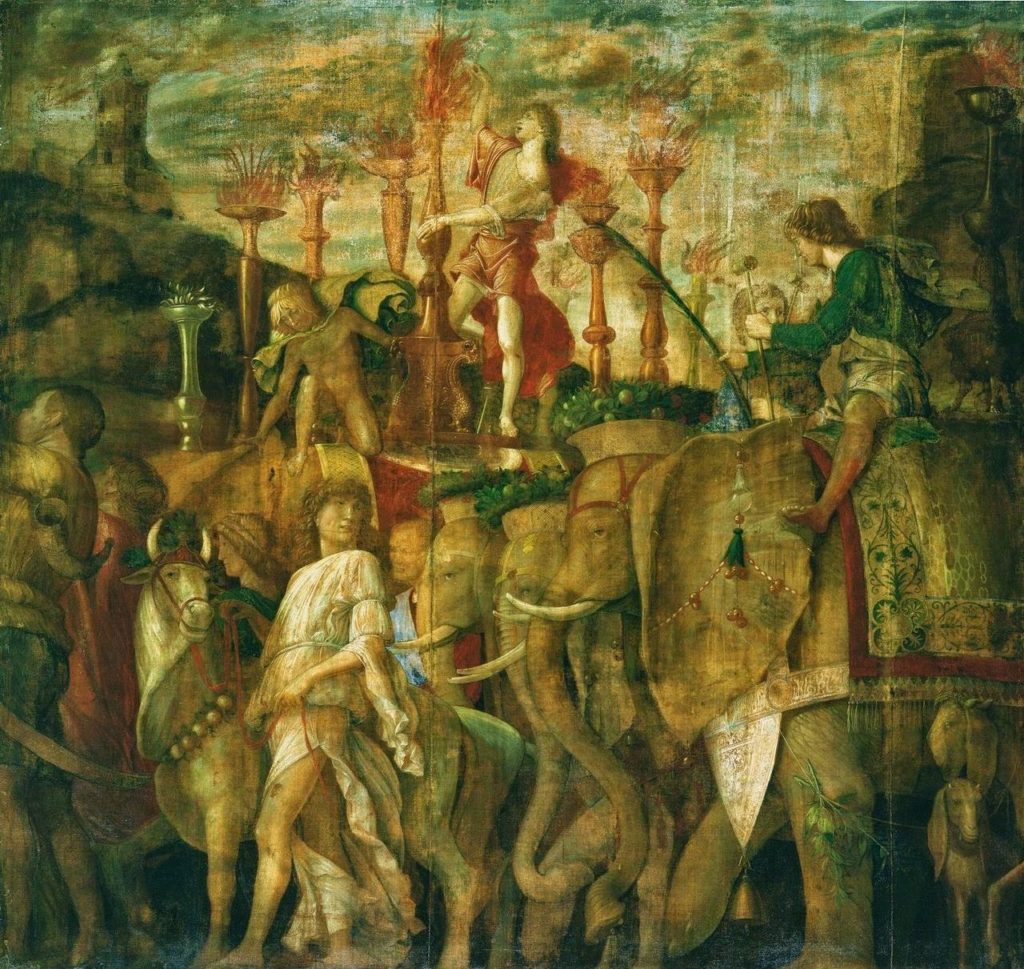
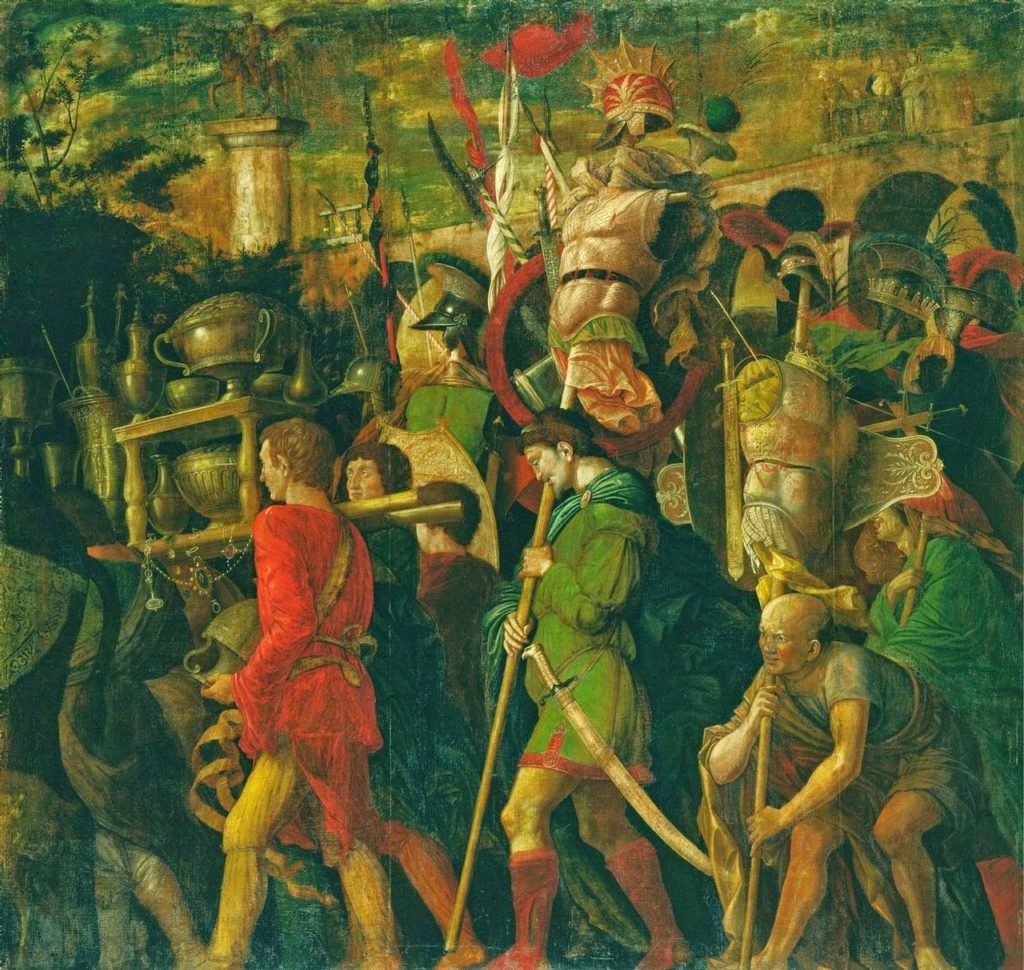
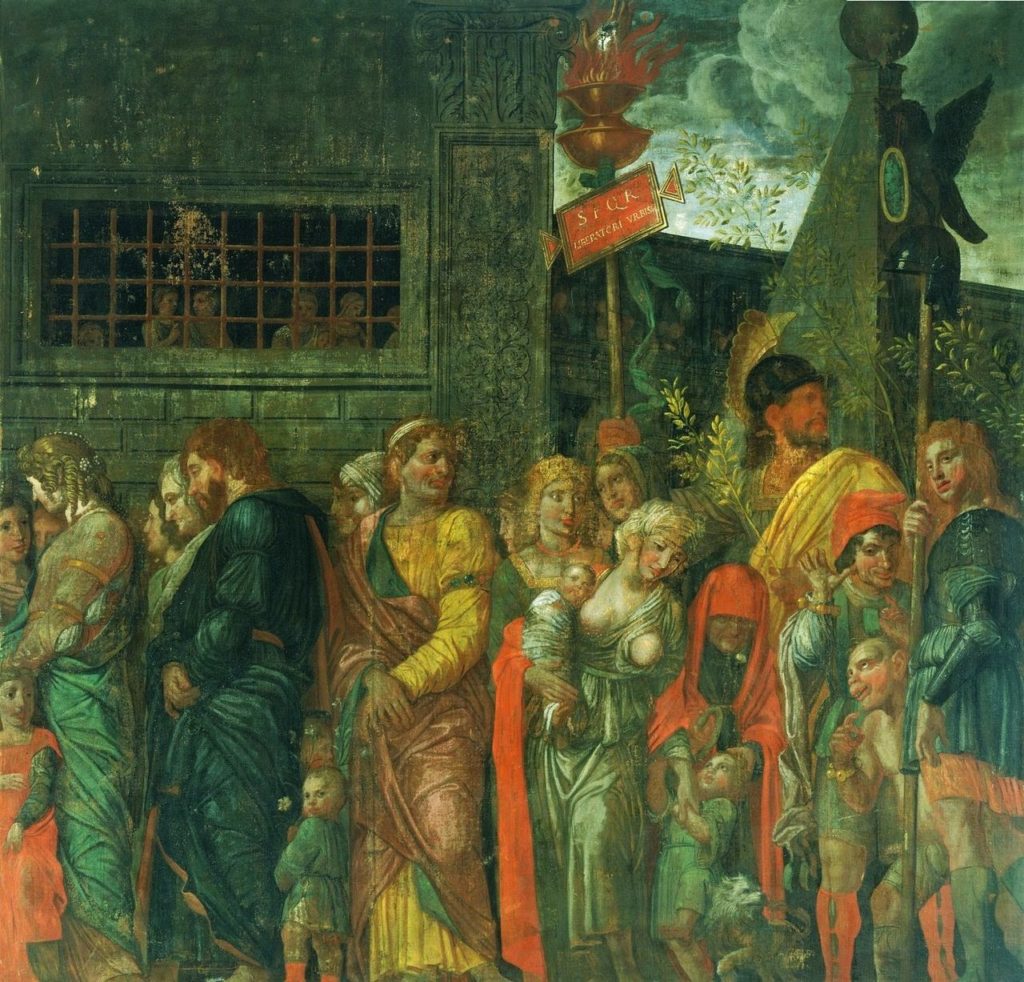
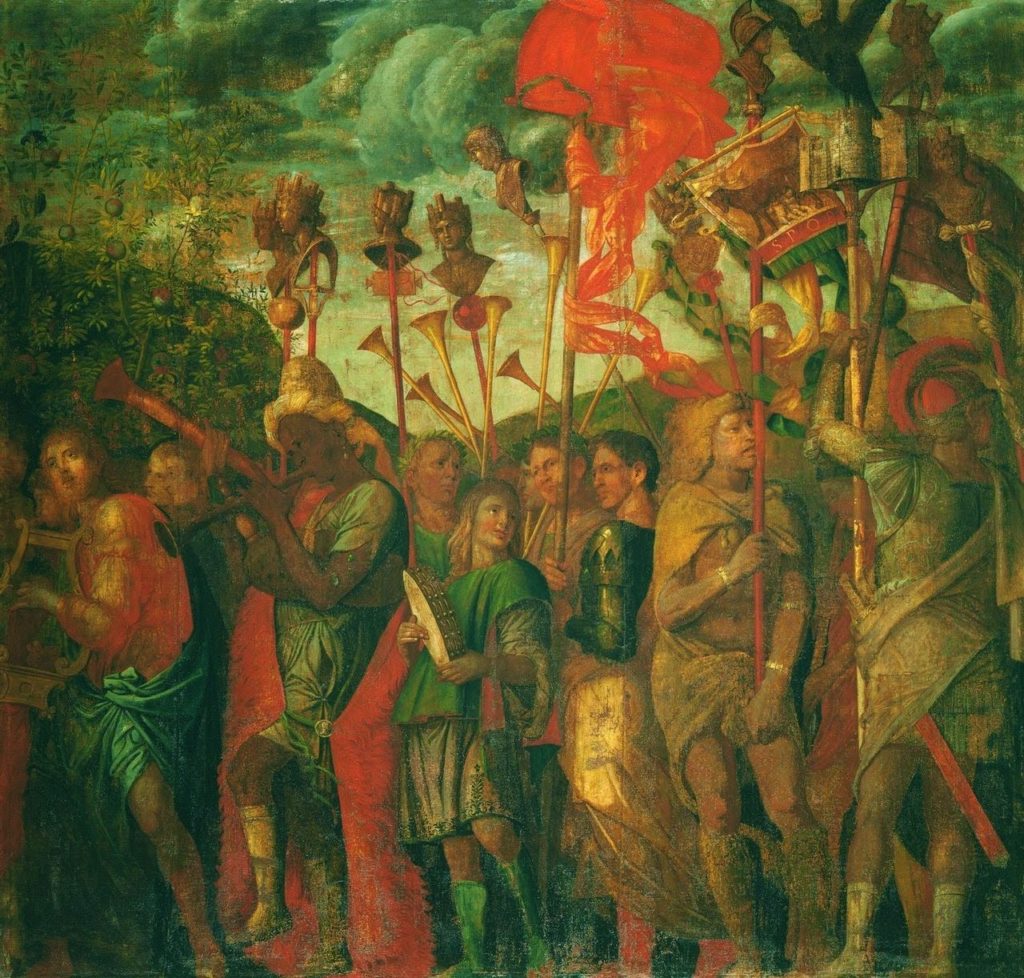
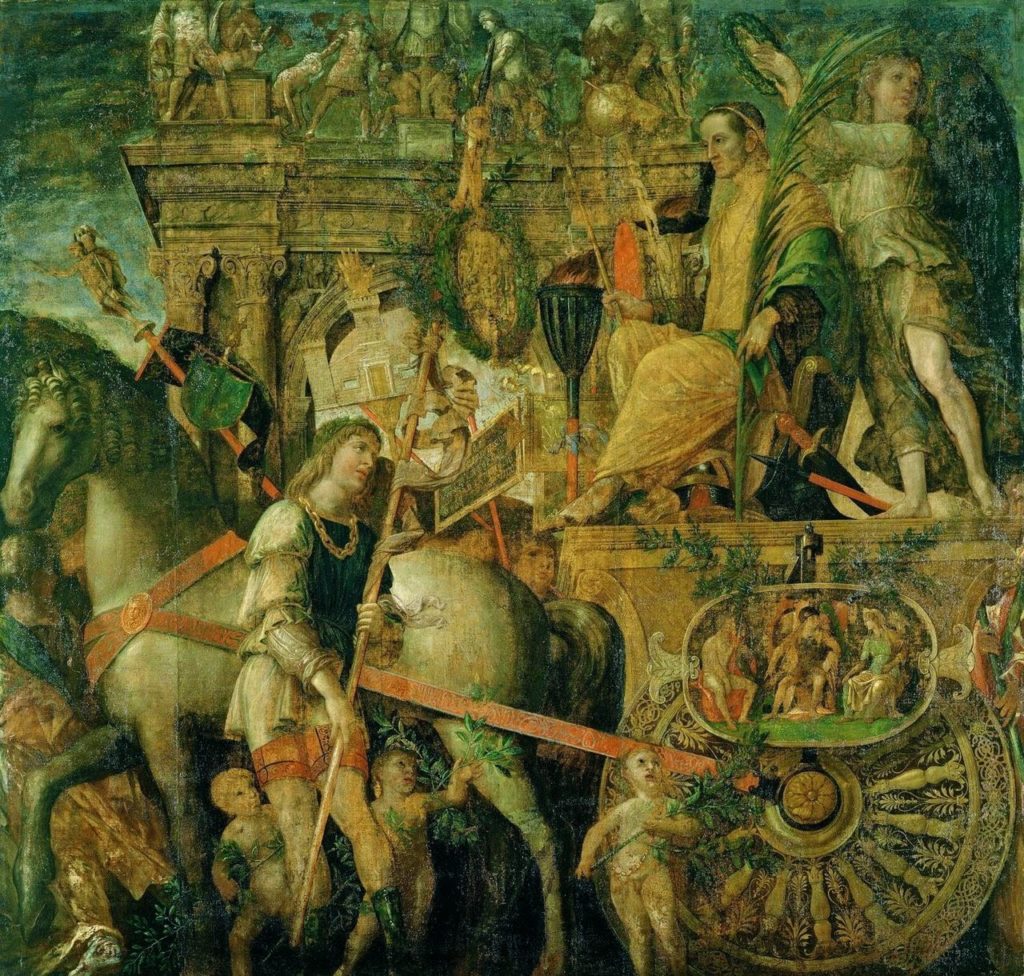
This is where my blog goes a bit off piste and veers utterly away from further discussion of the Courts, because I was very struck by the style of the vibrancy of colours, the all-male procession and the scale of the ‘booty’ and the similarity to the canvases of Andrea Mantegna’s Triumphs of Caesar which are housed at Hampton Court Palace in London.
The nine paintings depict Caesar’s triumphant return from his campaign against the Gauls in a cavalcade of soldiers and booty.
In his book ‘Lives of the Artists’ Vasari says: ‘The best thing Mantegna ever painted’ and the enormous canvases became extremely famous throughout Europe.

Stop being confused by court cards! Start being excited by the possibilities! Become a court card adventurer along with me 🙂 The Tarot’s Court Cards are my specialist area. They talk to me. Not LITERALLY though ….