Tag: sola busca tarot

  • 3-card Reading | Inspired by the Tarot’s 10s

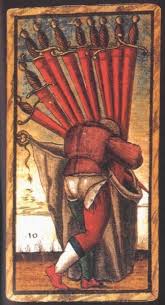
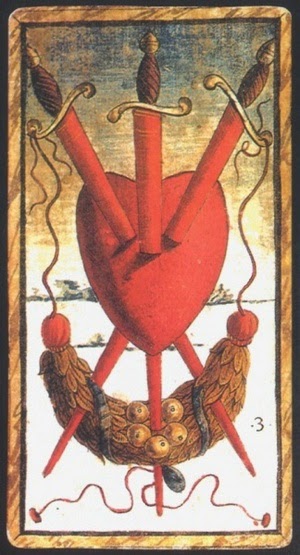
    10 Swords
    Sola Busca Tarot

    Here’s another spread for you, taken from my e-book ‘Tarot Kaizen‘ that you can use for the coming week.

    Prior to this spread exercise, there are four exercises that consider the broad function and energy of the Tarot’s 10s.

    Take your entire deck (ie not just the 10s) and give it a thorough shuffle to break up any ordering that may be in your deck from previous exercises:

    Card 1 (draw the card from the bottom of your deck):
    This comes to an end.

    Card 2: (draw the card from the top of your deck)
    This comes to fruition.

    Card 3: (draw from the interior of your deck)
    Plant THIS to harvest later.

    Record your reading in your journal.

    If any of those three randomly drawn cards are 10s, what can you say about the incoming energy of the suit which follows the outgoing suit?

  • Sola Busca | Mantegna | Triumphs of Caesar

    In an earlier post, Heroes Warriors and Worthies, we took a look at the naming of the Court Cards in French playing card decks and how these have been incorporated into Dame Fortune’s Tarot Wheel.

    Another deck that incorporates named court cards is the Sola Busca Tarot.

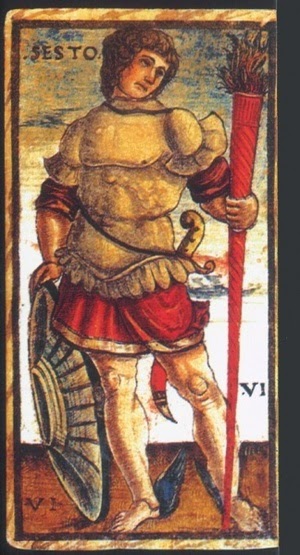
    This deck originated in Italy during the late 15th Century and is quite different from other Tarocchi decks in that it is entirely populated by warriors (with exception of the Court Queens).  The Majors are all named.  The Fool remains Il Mato (the Fool) but all else are whirled into a vortex of classical names ….Nerone (Nero), Catulo (Cattulus), Catone (Cato… no, not the Pink Panther one) and so on.

    The images in this deck are richly coloured and brooding in their mood.

    This deck is very important indeed, in that it has clearly formed the basis for the Rider Waite Smith deck.

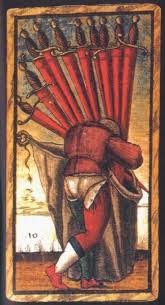
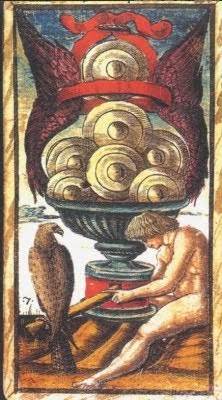
    Look familiar? The Sola Busca’s 10 of Swords.

    As was the habit, the little Pages are not named – because in gaming decks there were only 3 court cards.

    We have:

    King of Swords – Alexandro M
    Queen of Swords – Olimpia
    Knight of Swords – Amone

    King of Staves – L Evio Plauto R
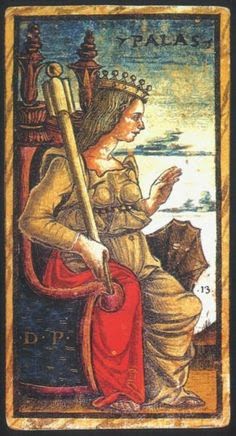
    Queen of Staves – Pallas
    Knight of Staves – Apolino

    King of Cups – Lucio Cecilio R
    Queen of Cups – Polisena
    Knight of Cups – Natanabo

    King of Coins – R Filipio
    Queen of Coins – Elena
    Knight of Coins – Sarafino

    The names have some affinity with the Heroes, Warriors and Worthies, as previously looked at here on m’blog.

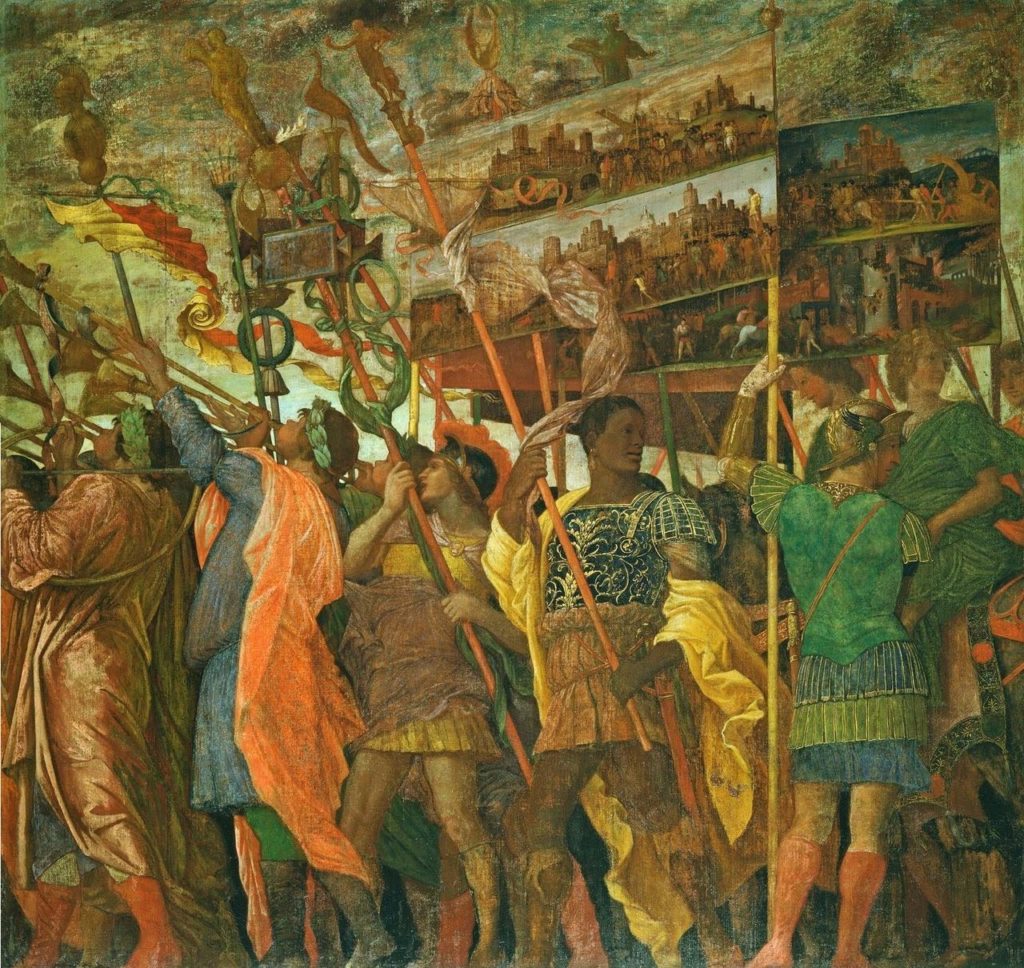
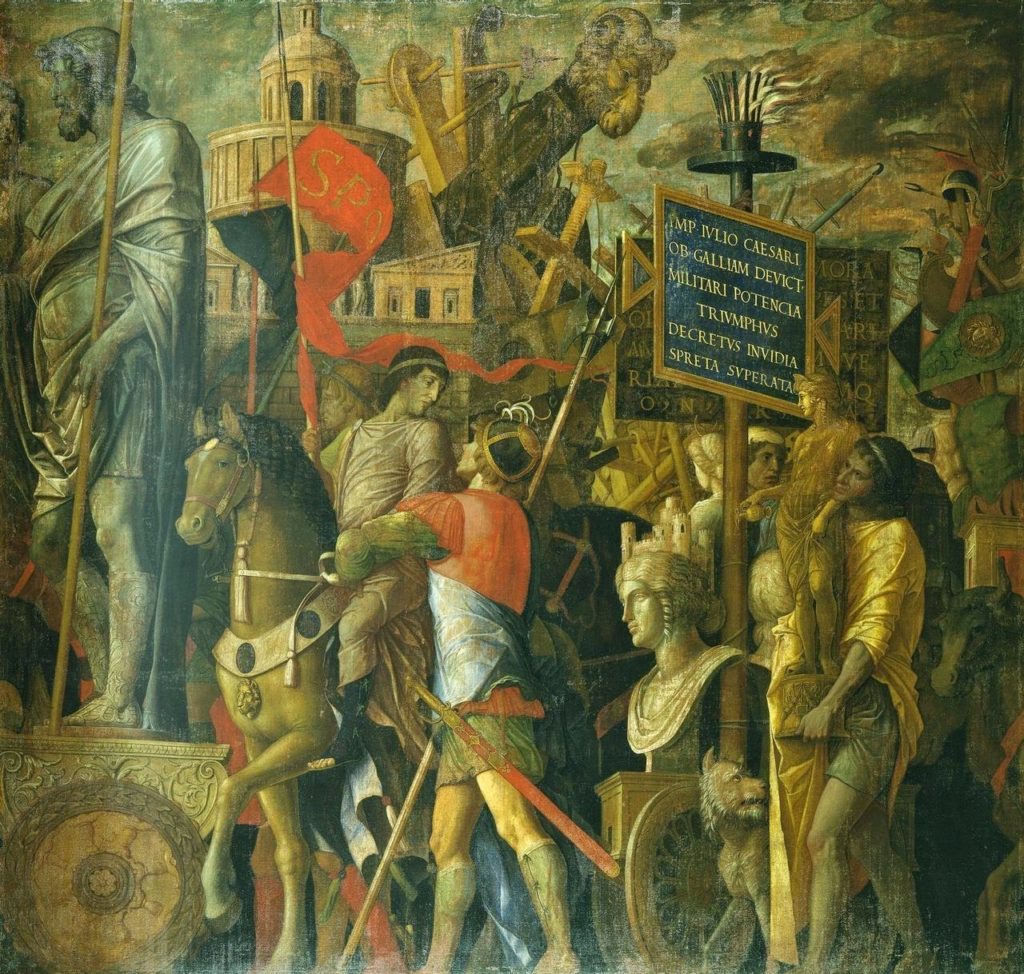
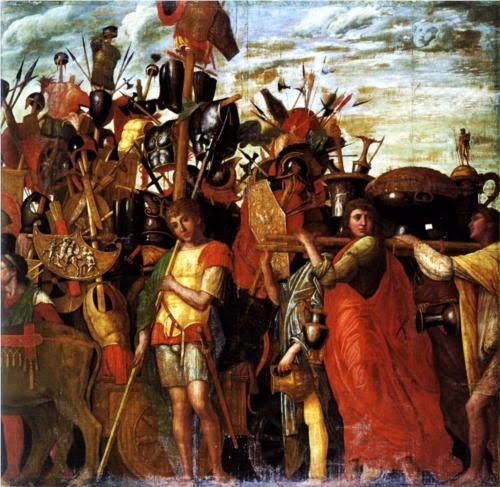
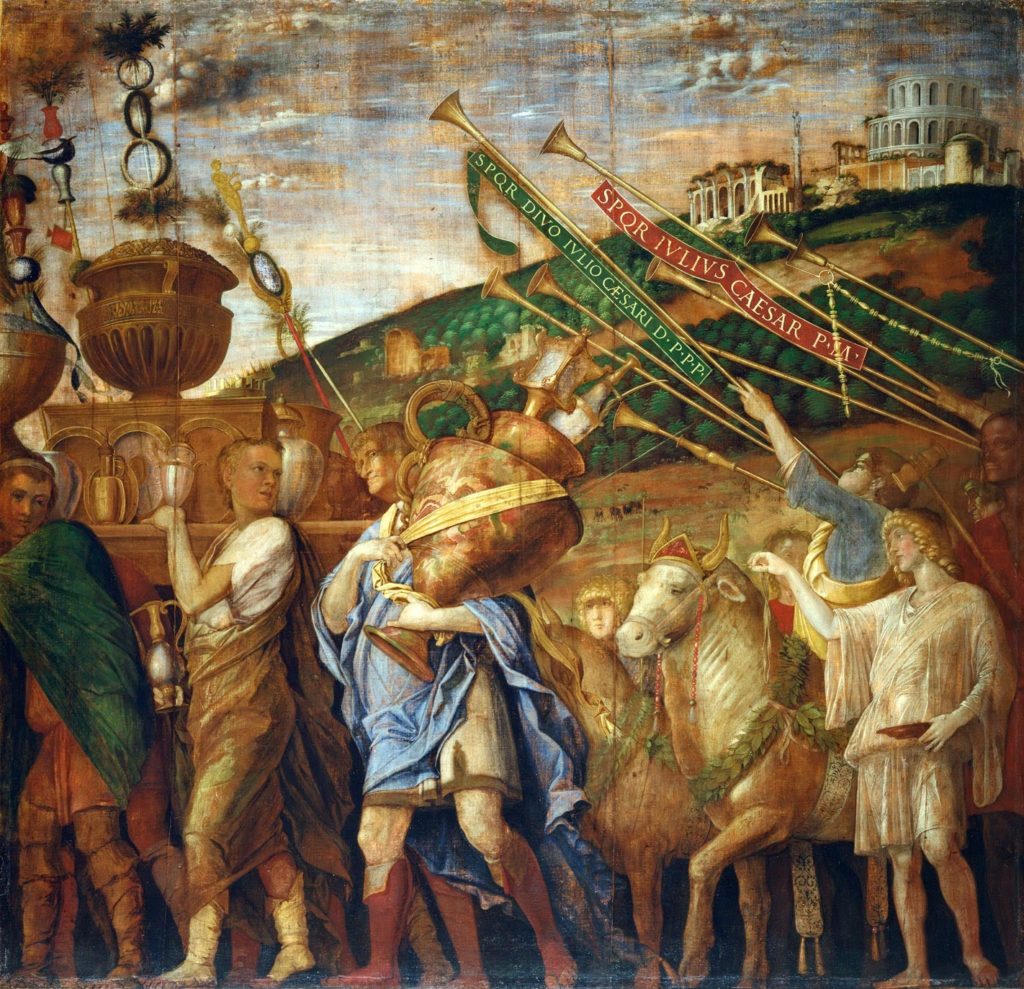
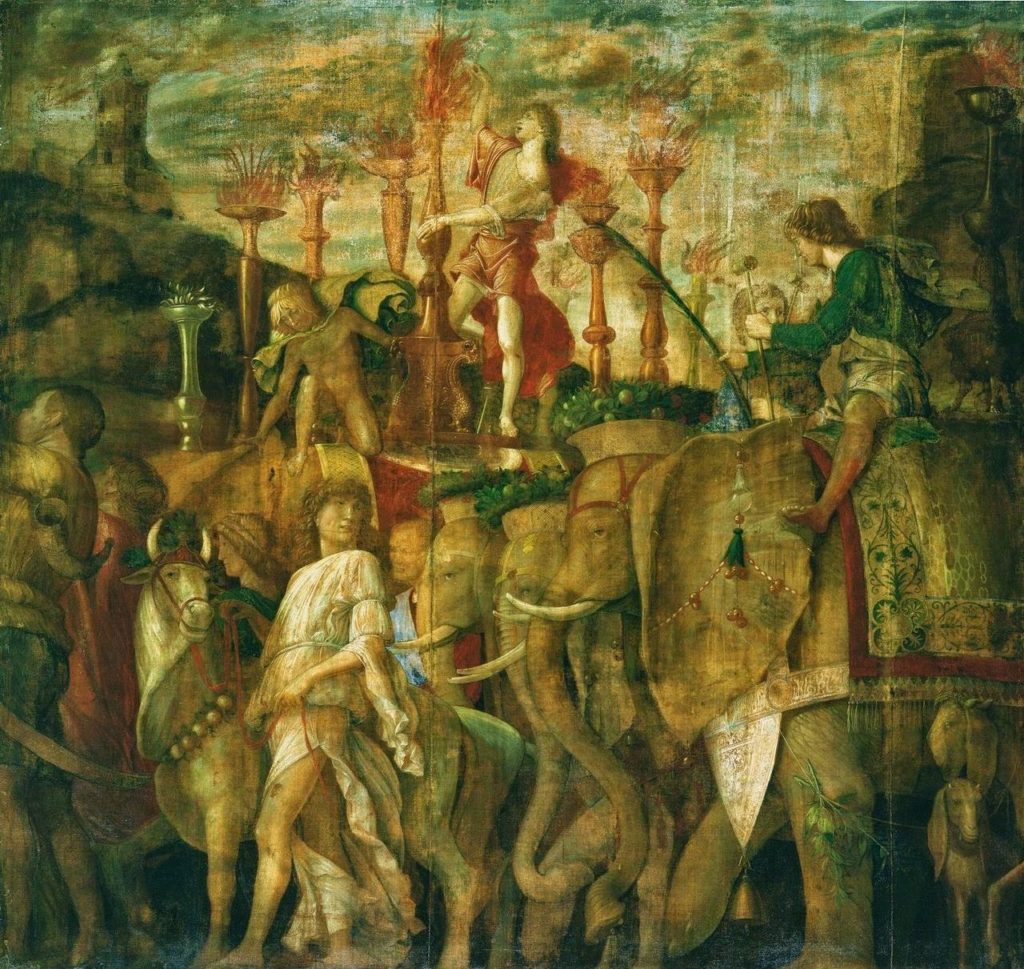
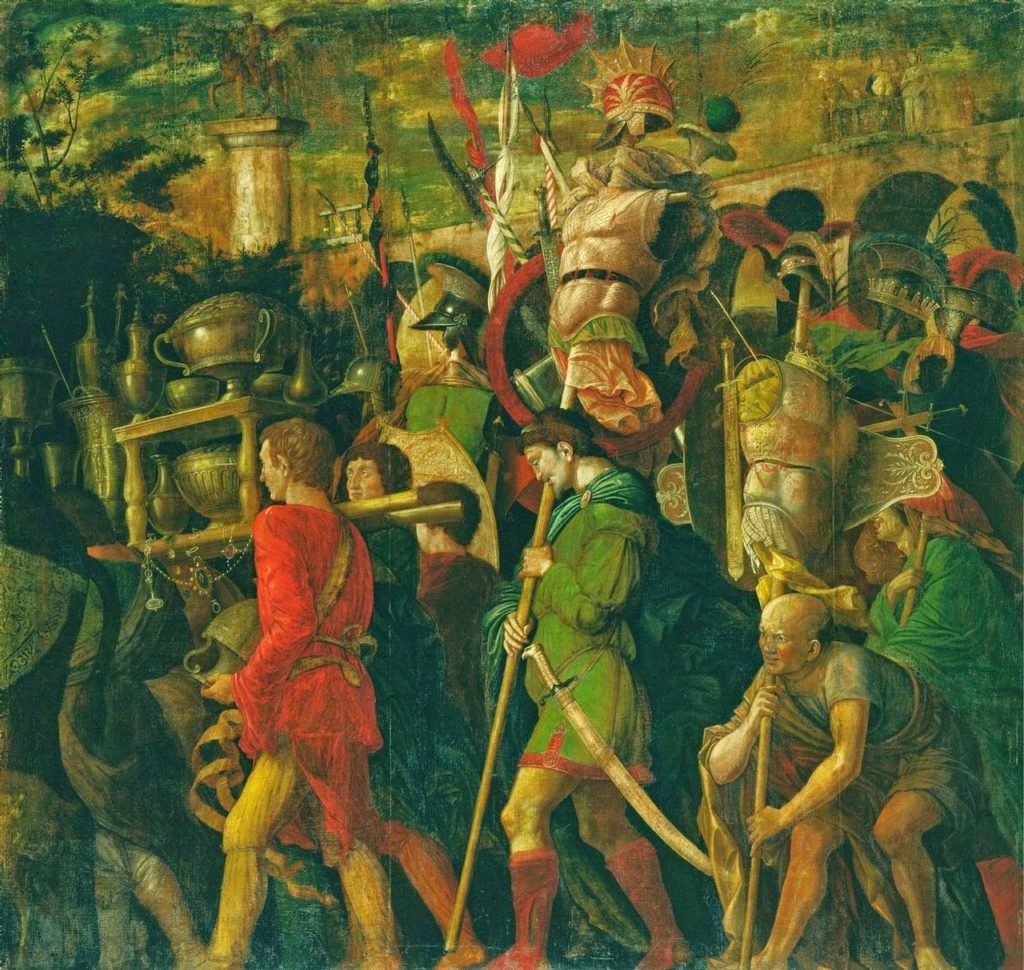
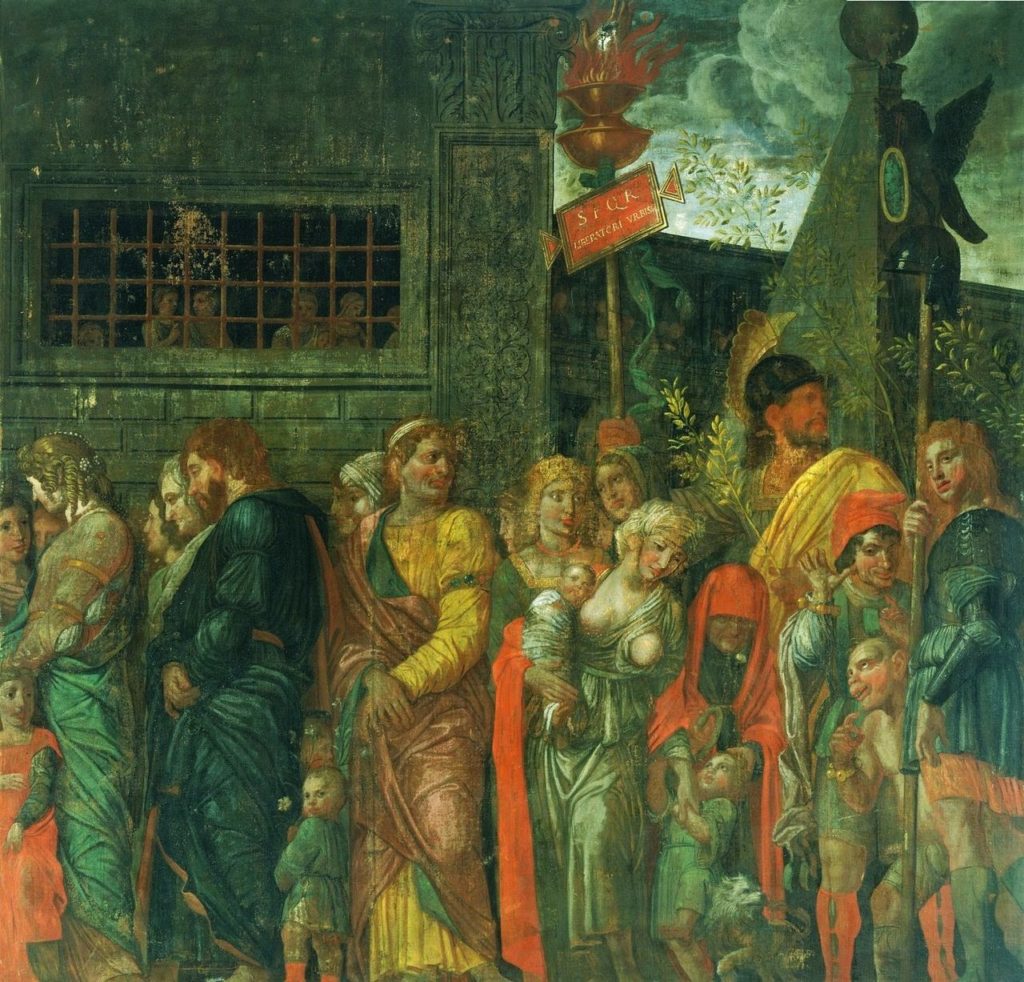
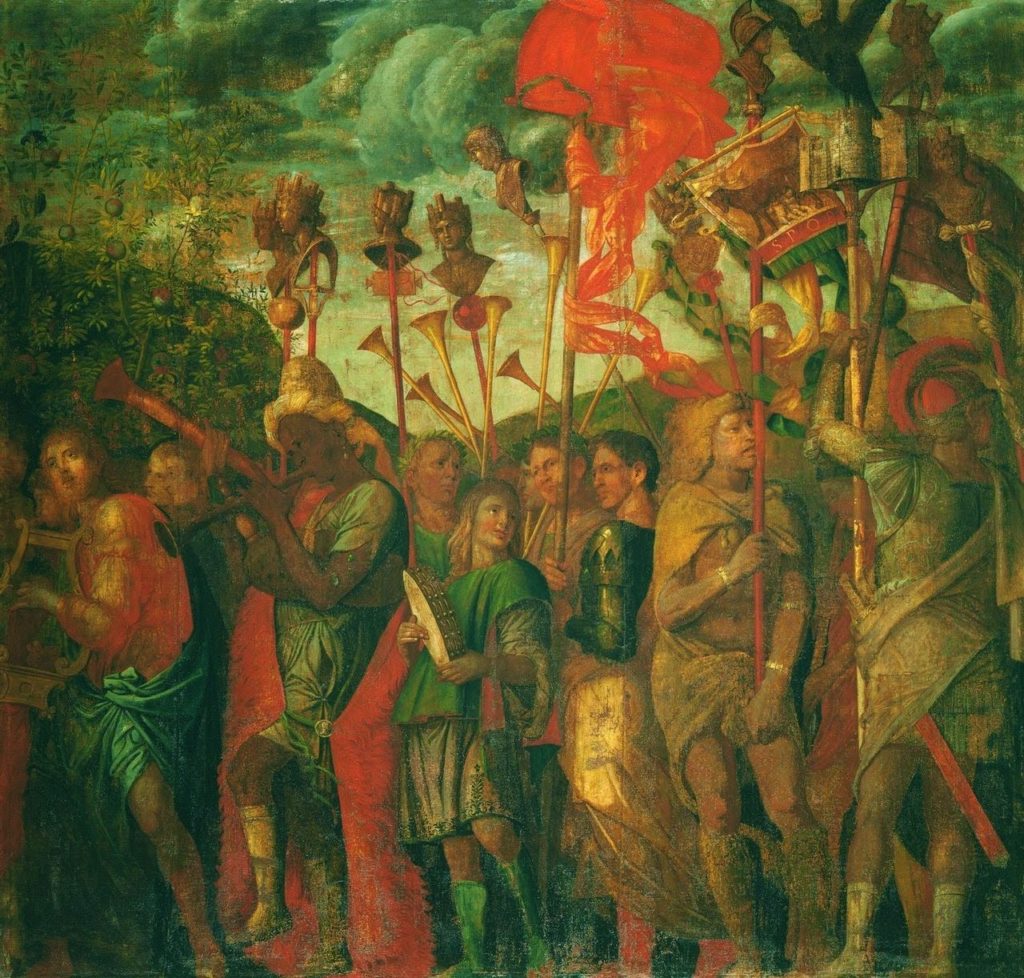
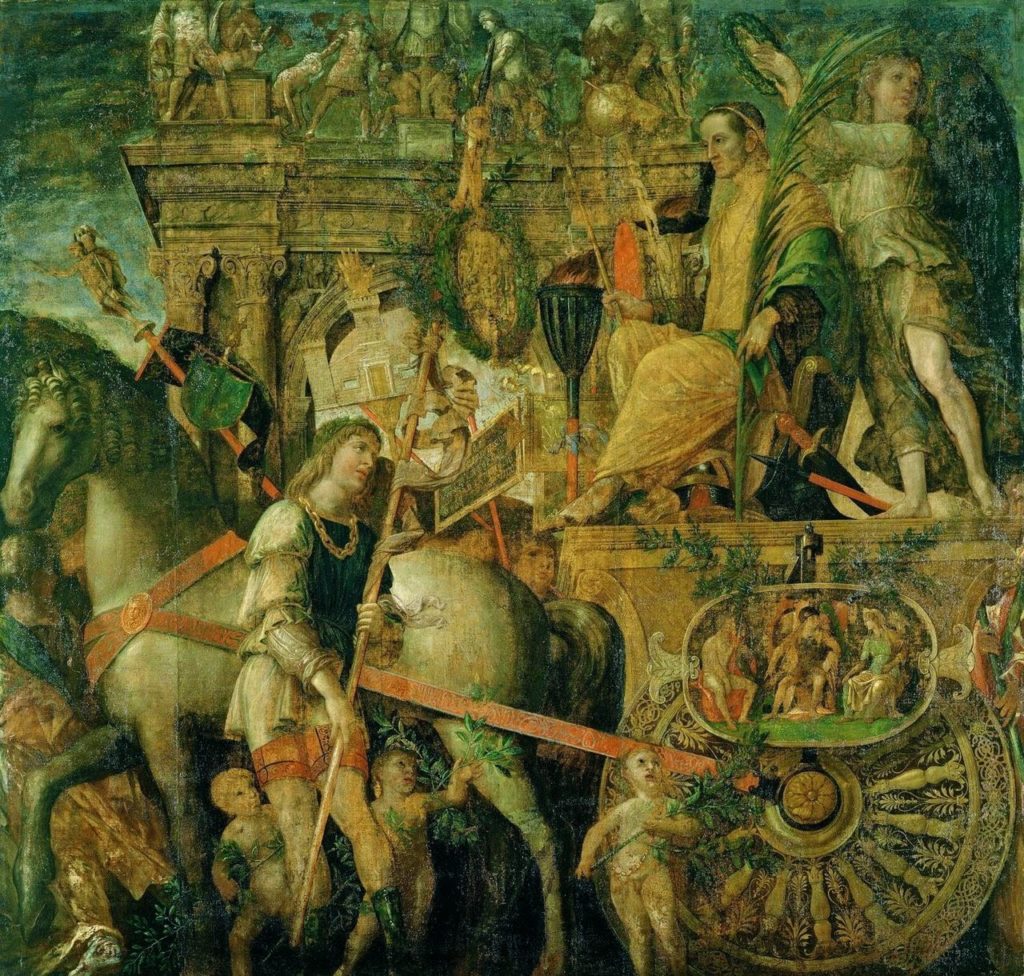
    This is where my blog goes a bit off piste and veers utterly away from further discussion of the Courts, because I was very struck by the style of the vibrancy of colours, the all-male procession and the scale of the ‘booty’ and the similarity to the canvases of Andrea Mantegna’s Triumphs of Caesar which are housed at Hampton Court Palace in London.

    The nine paintings depict Caesar’s triumphant return from his campaign against the Gauls in a cavalcade of soldiers and booty.

    In his book ‘Lives of the Artists’ Vasari says: ‘The best thing Mantegna ever painted’ and the enormous canvases became extremely famous throughout Europe.

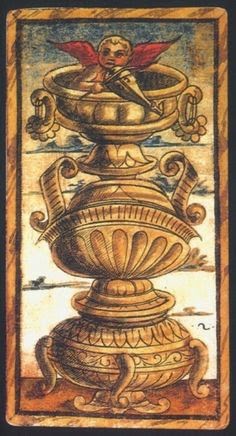
    The scale of the vases?  
    The artfully arranged trophy ‘Cups’?

    Look at the stuck-on breasts of Pallas. Do you think they resemble the bare breasts of the captive above?  The cloudy skies? 
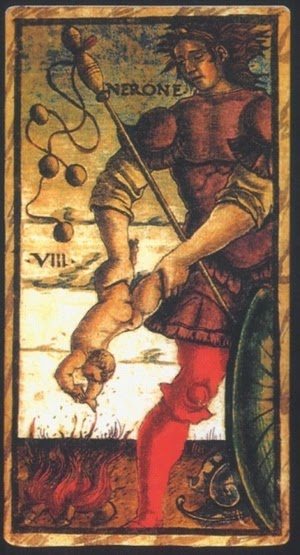
    The only children depicted in the Triumph are captives.
    What about this child in the ‘Nerone’ (Justice) card of the Sola Busca?
    Perhaps the resemblances are pure fancy on my part, but if Mantegna’s paintings were famous throughout Europe, why wouldn’t a wealthy Italian Lord not want his own version?
    It has been suggestested that the creation of the Tarot’s Trumps IS based on Roman Triumph parades.  What if it was THIS one in particular, painted between 1484 – 1492?  The Sola Busca Tarot is estimated, by its Tarot historian champion, Giordano Berti, to be around 1490-91.
    So the two dates dovetail together nicely.
    What do you think? Is the link allllllll in my head?!

    *** edit: since I’m not a huge fan of very lengthy blog posts, I’ll just say here that I plan to write this up in greater detail and will work towards either showign a link or showing that there is no link.  And you will be able to have it as a pdf to read.  But it will take me a while, so don’t hold your breath! 😀
  • Heroes | Warriors |Worthies

    A long time ago,  I promised to show you the Court Cards from the Dame Fortune’s Tarot Wheel deck (by Paul Huson) because they are REALLY interesting: They are all named after well-known characters from classical literature and the Bible.

    I know.  CLASSICAL LITERATURE!!  THE BIBLE!!! Here on m’blog!!!!

    Before we meet those Court families, I thought that it made good sense to take a look at just why these cards bear the names that they do.

    *does the wobbly hands time thing*

    Back in the 1400s in France, it was the custom to pop names onto the face cards of the standard
    deck of playing cards. Two groups of names were common; one that
    became known as the Paris pattern and the other, the Rouen pattern.  These patterns, or lists of names,  have quite a bit of overlap and it is the Paris pattern that we are interested in today because this is the design that influenced early Tarot decks, such as Etteilla’s Tarot in the 1700s. And it is Etteilla’s deck that forms the basis for The Dame Fortune’s Tarot Wheel.
    The Paris Pattern

                       Hearts         Spades            Diamonds          Clubs
    Kings          Charles       David              Caesar                Alexander
    Queens       Judith         Pallas              Rachel                Argine
    Knaves       La Hire      Ogier               Hector          Judas
    Maccabeus *

                                                                                       Judah Maccabee

    Although we’re not talking about them today, here are the famous stars of the Rouen Pattern.

    The Rouen Pattern


                       Hearts          Spades    Diamonds    Clubs
    Kings         Alexander     David        Caesar          Charles
    Queens      Rachel           Pallas        Argine          Judith
    Knaves      La Hire          Hector      Ogier            Judah Maccabee **
                                                                                 Judas Maccabeus
                                                 

    Info from the International Playing Card Society website                                                                
    You will have noted, because I know that you are a clever and discriminating personage, that there is a Tarot rank missing – the Knights are not included in either the Paris or Rouen Patterns.  There’s nothing sinister about this, just that in ordinary playing card decks (where these patterns come from) there were only the three ranks of King, Queen and Knave.   We’ll be talking about this again when we get on to the Sola Busca Tarot in a week or so, because it’s contrary!  I know, it’s almost like I’ve PLANNED these posts.

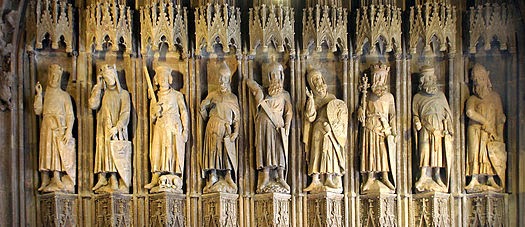
    13th century ‘Nine Good Heroes’
    (City Hall, Cologne)

    It was also suggested to me that the Nine Worthies (Neuf Preux) play a role in the names selected for the Paris and Rouen patterns.

    These Worthies were famed rulers of the Christian, Jewish and Pagan worlds and were first mentioned in a chanson de geste (a type of epic poem), ‘Voeux du Paon’  (‘The Vows of the Peacock’) by Jaques de Longuyon around 1312 – all about chivalry.

    It seems likely that similar chivalric tales (which were all the rage) influenced the naming of the cards in both the Paris and Rouen patterns.  

    The Nine Worthies 

    Pagan         Hector, Alexander and Caesar
    Jewish        Joshua, David, Judas Maccabeus
    Christian    King Arthur, Godfrey of Bouillon,  Charlemagne
    I’ve highlighted the overlapping names in the Paris Pattern with the Worthies in red.

    * Edit:  Paul Huson very kindly commented on this blog post and provided the following correction:  “Judas Maccabeus was one of the Nine Worthies but his name was never attached to the Knave of Clubs. From 1490 the Knave in both Rouen and Paris patterns bore the name “Lancelot” (of Camelot fame) although the name “Roland,” another name from French legend, was briefly tried but didn’t last”. 

    In the late 1300s,  Lists of 9 Lady Worthies were created, but only Judith seems to be an overlapping name. However, the Lady Worthies seem to change depending on who is creating the list!
    So while the Worthies must have influenced the naming of many of the male characters in the Paris system for playing cards,  the sources of the Lady Worthies just seem to be sourced from the Bible (Judith and Rachel), Argine isn’t a name that I’ve managed to find as a heroine anywhere (but it means ‘dam’ or ‘bank’ in Italian) and Pallas will be referring to the Greek goddess, Pallas Athene.
    King Arthur and Lancelot need no introductions from me but some of the others might need a Big Up:  La Hire was a French military commander during the 100 Years War and comrade of Joan of Arc and although Ogier (The Dane) was one of Charlemagne’s Knights, he became more widely known as a subject of European literature.
    Anyway, now that we’ve cleared all that up, I hope that you’re all geared up to meet Dame Fortune’s Families……in Monday’s post!
  • Page of Swords | Sola-Busca Tarot | Giordano Berti

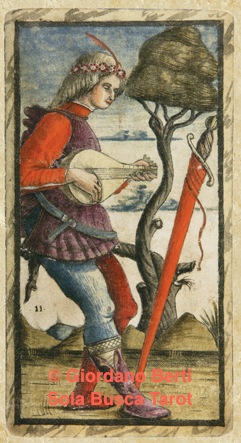
    The Page of Swords – Sola-Busca Tarot
    If you have a passion for classical Tarot decks, you will know that the Wolfgang Mayer version of the 15th century Sola-Busca Tarot is enjoying a resurgence in popularity.  


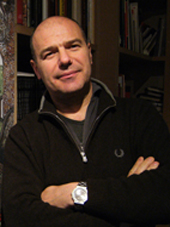
    Giordano Berti, Tarot author and scholar, is the man behind this work and he has very kindly agreed to answer some questions about the deck, and, more specifically, the Court Cards.


    First of all, Giordano, tell me how you came to reprint the
    Sola-Busca Tarot?


    The version of
    the Sola-Busca Tarot
     I’m promoting is not my
    work. As you know I’m writer, not Tarot producer. 
    This is the deck realised by
    Wolfgang Mayer in 1998 in Germany, faithfully reprinted from the
    original deck of 1491.

    Mayer made an edition limited to 700
    copies.  Each of these decks has a Warranty card numbered and
    hand-signed by Mayer.

    In 2012 the Mayer family decided to
    sell the warehouse stocks, the printer having died, and I have bought
    about 300 decks.
    What is your involvement with the
    artwork – has it been edited or recoloured?

    Mayer’s version is really
    extraordinary because it respects both the measurements and the original
    colours of the fifteenth century deck.

    Since the decks that I bought from
    the family Mayer had no packaging, I asked an Italian craftsman to
    manufacture two types of box. A book-shaped box, with marbled paper
    in Florentine style (DeLuxe box), and a box with sturdy golden
    cardstock (Golden box).

    Then, I added the
    deck’s 8-page booklet where I summarise the story of this deck.  
    I also give the meanings of  the 78 cards taken from the book Sola-Busca
    Tarot’
    by Sofia Di Vincenzo (US Games
    Systems, Stamford, 1998) and a simple method to use these cards.
    Is is quite a large
    format deck?

    Each cards measure exactly 150 x 82
    mm, i.e. 5.9 x 3.2 inches.  
    Wolfgang Mayer used a cardstock
    slightly larger so you can see exactly the boundaries of the paper in
    its original size.
    The Sola Busca is the first Tarot to
    show fully illustrated Minor Arcana cards, is that correct?
    We must remember
    that
    the Sola-Busca is the only Tarot deck
    that came up to our day complete with all 78 cards. But this deck is
    very important historically because is the first fully-illustrated deck.
    It was necessary to wait for the
    Rider-Waite-Smith Tarot, printed in 1909, to find a new deck
    illustrated in the Minor Arcana.
    In fact,
    some of the Sola-Busca served as inspiration for the Arthur Edward
    Waite and Pamela Colman Smith.
    This is, of course, not your first
    Tarot deck – which other decks have you been involved with, Giordano?

    I started to study the Tarot around
    1974 and afterwards I studied at the University the relationship
    between art and esotericism … but the Tarot are my first love and I
    have devoted a lot of effort both in the historical study and the
    design of new decks.

    I have created many
    h
    istorical exhibits about Tarot in
    important places such as the Castello Estense in Ferrara (1987), the
    Archaeological Museum of Bologna (1983) and the Museum of Castel
    Sant’Angelo in Rome (1985).

    On Tarot I also wrote several books
    and exhibition catalogues, but one of my biggest satisfaction has
    been the design of new Tarot decks.

    Since 1994 I have
    created eleven new decks, all illustrated by great artists.
    The
    complete list can be found on the website Tarotpedia, at the page dedicated to Giordano Berti.

    I couldn’t say which of these is
    most important, because each deck requires a great effort and
    each one almost becomes a child to you.
    • Celtic
      Tarot
       (Lo
      Scarabeo, 1994), 78 illustrations by Giacinto Gaudenzi and Saverio
      Tenuta.
    • Tarot
      of Druids
       (Lo
      Scarabeo, 1994), with Bepi Vigna, 78 illustrations by Antonio
      Lupatelli and Severino Baraldi.
    • Enchanted
      Tarot
       (Lo
      Scarabeo, 1995), 78 illustrations by Giacinto Gaudenzi.
    • Dante’s
      Tarot
       (Lo
      Scarabeo, 2001), 78 illustrations by Andrea Serio
       Dante_Tarot.
    • Ramses.
      Tarot of Eternity
       (Lo
      Scarabeo, 2003), 78 illustrations by Severino Baraldi.
    • Golden
      Tarot of Renaissance – Estensi Tarot
       (Lo
      Scarabeo, 2003), 78 illustrations by Jo Dworkin.
    • Bacchus
      Tarot
       (Dal
      Negro, 2005), 78 illustrations by Luigi Scapini.
    • Venice
      Tarot
       (Dal
      Negro, 2007), 78 illustrations by
       Davide
      Tonato
       ([8]).
    • Angels
      Tarot
       (Lo
      Scarabeo, 2007), 78 illustrations by Arturo Picca.
    • Universal
      Wirth Tarot
       (Lo
      Scarabeo, 2007), 78 illustrations by Stefano Palumbo.
    • Initiatory
      Tarot of the Golden Dawn
       (Lo
      Scarabeo, 2008), 78 illustrations by Patrizio Evangelisti.
    I think that the
    artwork is beautiful and I have been looking at the Court Card
    images.
    Why are the Pages the only
    rank who do not have names?

    I suppose
    the inventor of these cards have not given a name to the Pages
    because there are few references to famous servants in ancient
    literature.
    What significance
    are the names of the remaining Court members?
    Are
    they characters from classical literature?

    Some
    famous Knights, Queens and Kings are included in the Sola-Busca Tarot with the
    clear intent to put them in relation with the life of the Alexander
    the Great, represented in the King of Swords.
    Tell me about the Major
    Arcana of this Tarot, how is it different to other Tarots?

    The Major
    Arcana of the Sola-Busca Tarot portray characters from Greek and Roman history,
    except for
    Nenbroto
    (Trump XX) and
    Nabuchodenasor
    (Trump XXI), who are Biblical characters, and the
    Fool
    (Trump 0), which has no name.

    I suppose the
    intent of the inventor was not to create a gallery of ancient
    celebrities, because many of the names of the
    Major
    Arcana are not famous for anything. Probably there is a profound
    mystery in choosing these characters: they could refer to friends of
    the author of the deck, who shared philosophical interests with him.

    In any case, the
    iconography of the
    Major Arcana in
    the Sola-Busca Tarot is very different from the traditional one. In many figures
    there are torches and altars with fires: a detail that, according to
    Sofia Di Vincenzo, alludes to the practice of Alchemy.

    Apparently the
    supposed inventor of the
    Sola-BuscaT, the
    painter Nicola di Maestro Antonio, was a friend of alchemists.
    The Page of
    Swords is a wonderful image – he seems to be strumming a tune on his
    lute to the sword in front of him!
    Tell me about his
    character and how he is interpreted in the Sola Busca Tarot.

    This image, in my opinion, show in
    allegorical way the ambiguity of feelings that animate the immature
    people, not just those who are young. The contrast is given by the lute,
    an instrument of peace and poetry, near the sword, instrument of war
    and death.

    The proximity of the sword means
    that at any moment the Page could take it in his hand with menacing
    intent, both defensively and offensively.
    How is your Sola Busca edition
    different to other issues of the deck?

    I am convinced, along with Sofia Di
    Vincenzo, that the Sola-Busca Tarot is the first deck to be designed
    with non-gaming purposes, but this is purely speculative.  It is evident in
    many cards references to Alchemic tradition, which must be
    interpreted not as a way to make gold but as practice for improving
    the individual.

    I hope to
    publish
    , before the end of 2013, a
    book I’m working on, entitled
    Sola-Busca
    Tarot. Secret Code of Alchemy.


    If you would like to buy the Sola-Busca Tarot,  write to: giordano.berti@gmail.com

    Many thanks to Giordano Berti for taking the time to answer my questions about the Sola-Busca Tarot.  You can explore the deck here.

    Giordano provided his answers in English, which I edited in one or two places to read more smoothly.  Any translated errors are, therefore, entirely of my own making 🙂

    ‘like’ the Sola-Busca Facebook page!

    Visit Giordano’s website to explore the deck in greater depth.  Read other articles about the Sola Busca Tarot here