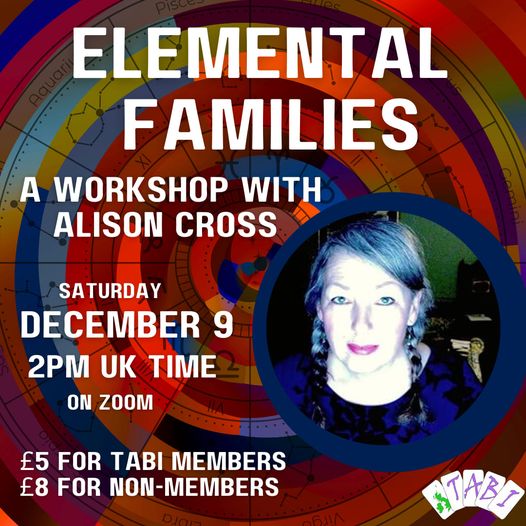
In the run up to Christmas (yes, I dared speak its name!) why not carve out an hour or so with me on Saturday 9th December at 2pm (UK) while we go through our elemental tarot court card families and how to place all 16 of them on the Wheel of the Year?
You don’t need to be a member of TABI to take part, but it’s a few shekels less expensive if you ARE a member – £5 for members and £8 for non-members.
All you need is a tarot deck and stuff for note-taking. Maybe bring a mince pie. Maybe a li’l Christmassy sherry. Maybe a party hat. Maybe a sweater with a Santa on the front. Maybe a flashing red nose a la Rudolph. You do you! Come along and join the gang!
Look forward to seeing you – the more the merrier!
Stop being confused by court cards! Start being excited by the possibilities! Become a court card adventurer along with me 🙂 The Tarot’s Court Cards are my specialist area. They talk to me. Not LITERALLY though ….
All the Best Minds have been mulling this one over when I asked about it on instagram and on TABI’s facebook group: Which is correct – Marseille or Marseilles when talking about the tarot deck of that name?
After reading everyone’s comments on both platforms (and if you were one of the commenters, thank you so much for getting involved – I really appreciate it!) I have drawn some conclusions and here’s my tuppence-worth:
Marseille is a city in the South of France and the French refer to it without that ‘s’ at the end, so, if you call the deck the Tarot de Marseille, you’re calling it by its French name and thus, you will be s-less in your Marseille chit chat.
However, if you are referring to it in English and you call it the Marseilles Tarot, then that’s the Anglicised version of the city’s name. And you will have that pesky additional -s.
Why does it have an additional s in English? In the pursuit of Truth (and nosiness!) I went on the hunt and have pulled up some information from Stack Exchange ….
It would seem that the English spelling of the French cities Lyons and Marseilles, with that pesky -s, ‘preserves an orthography that was current in France in the 19th century.
‘[This old] French system maintained a two-case system — nominative and oblique — where most Latin neuters merged with the masculine. The nominative masculine singular had a final s, like the forenames Georges, Charles, and Jules.’
So I hope that clears things up ….
*pauses for dramatic effect. and to let those words waft in one ear and out the other*
In the end, my take-away from this is that if you know that you are using the French when speaking about the deck (so using TdM or Tarot de Marseille in your conversation or writing) stay -s less.
If you are speaking about the deck as the Tarot of Marseilles, then sling in that -s on the end, because you’re referring to it in English.
Basically: you can use both 🙂 And there is information on the interwebs to back up your case, whichever case you are defending!
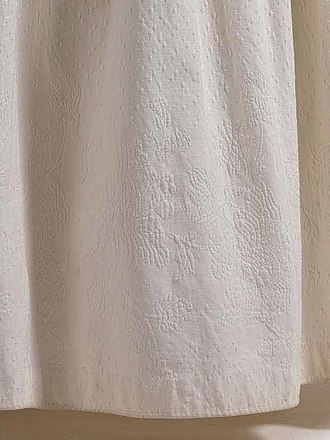
Now, HERE’S something that I didn’t know …. Marseille (without -s at the end) is also the name given to a particular kind of corded embroidery that was produces in Marseilles (that’s me, writing about the city in English) in the 18th century. Narrow channels were sewn into the garment and cord threaded through to give a raised effect. It is known as piquré de Marseille. So, that’s the FRENCH for it.
Aha, this will help sort thing out, thought I. It will be spelled with an additional -s at the end when spoken about in English.
Nope.
It’s called Marcella, in English.
Isn’t it beautiful?
1830s marcella skirt (image from Wiki)
So – add your thoughts to the discussion – Marseille or Marseilles? ‘What do you prefer – or *sings* shall we call the whole thing off?
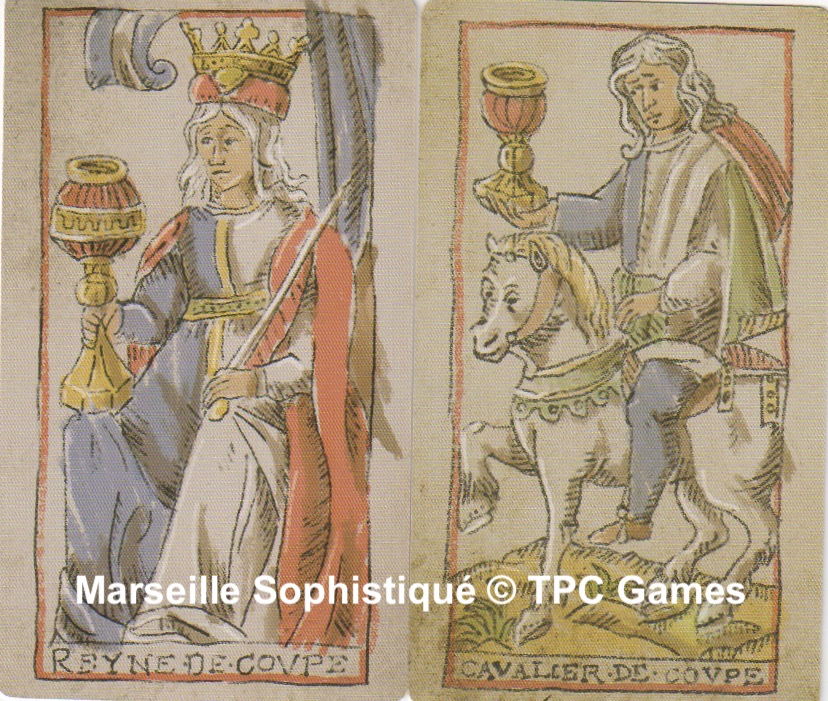
If you like the cover image of the Marseille Sophistiqué, you can read more HERE.
Stop being confused by court cards! Start being excited by the possibilities! Become a court card adventurer along with me 🙂 The Tarot’s Court Cards are my specialist area. They talk to me. Not LITERALLY though ….
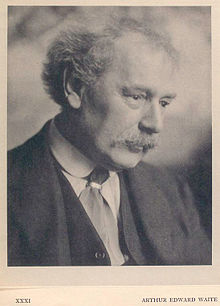
On this day, 163 years ago, in Brooklyn Arthur Edward Waite entered the world. For the first time? Who knows!
His father died when he was very young, so his mother returned to her homeland, England, taking the young Arthur with her.
It was the death of his sister in 1874 that triggered what would become a life-long interest in the occult and he soon found his way to the esoteric sections of the British Library. And aren’t we grateful that he did?!
I was today years old when I found out that for the nine years prior to the Rider Waite Smith Tarot being released into the world, Waite worked for Horlicks!
He joined the ranks of The Golden Dawn in 1891. This esoteric group was popular with creatives in the 1890s and unfortunately, there were a lot of very large personalities in its membership (including Aleister Crowley) and it pulled itself apart (put itself back together and pulled itself apart again!)
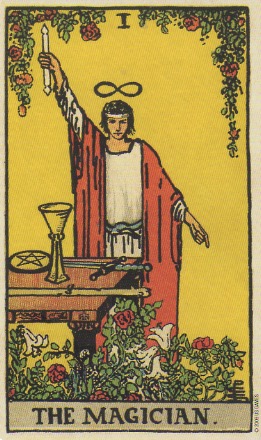
It was 1909 when he hit the big time (in the Tarot world!) when the tarot deck he’d designed along with fellow Golden Dawn member Pamela Colman Smith was published by Rider. Initially known as the Rider Waite Tarot, over more recent years the enormous contribution of Pixie Smith has been better recognised and it is more often referred to as the Rider Waite Smith Tarot.
It is the best-selling Tarot deck in the world – ranked no 1 for Cartomancy and New Age Mysicism and no 2 for Tarot, today on Amazon. Not bad going for a deck that is well over 100 years old!
Tonight I’ll have a Horlicks in your honour, Arthur!
Stop being confused by court cards! Start being excited by the possibilities! Become a court card adventurer along with me 🙂 The Tarot’s Court Cards are my specialist area. They talk to me. Not LITERALLY though ….
I thought I’d share some more little snippets from my forthcoming Court Card book on the DNA of the Tarot Court – never overlook the importance of the image itself, it can contain a barrow-load of insights!
When you look at a Court Card, what do you see – a mirror image before you or a real person?
It might be something that you have never really thought about, but it can help add nuance and insight to your readings, regardless of what kind of deck you are using – RWS clone, Marseille-style etc.
Imagine you are standing in front of a mirror and raise your left hand, in the reflection it looks as though it’s your right hand that has been raised.
Now, If a person was standing in front of you, facing you, and you both raised your left hands, it would be the opposite hand that the person would raise.
Try it yourself – it’s easier to see than to explain!
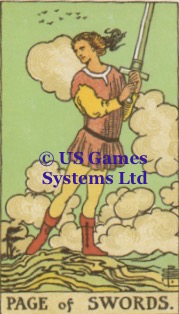
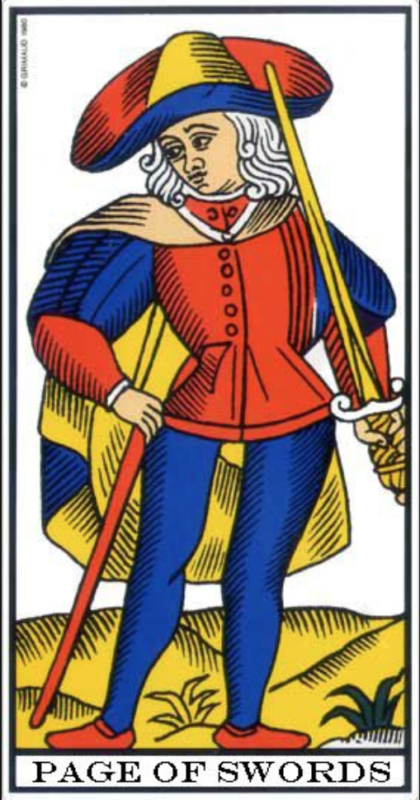
Let’s consider him as a reflection – he holds his scabbard in his left hand and his sword in his right hand. So far, so normal, right?
But if he’s a person standing in front of you, he holds his sword in his LEFT hand. This is not the hand generally associated with fencing and left-handedness has traditionally been associated with sinister things. Given that some of the common interpretations for the Page of Swords have an element of deviousness about them, a left-handed swordsman entirely fits the bill!
I’m a leftie myself and I wear the badge with pride!
With older decks, such as a Marseille, the original wood blocks could be drawn out and carved with, for example, a sword held in a right hand, but when the image is inked up and transferred to paper, it becomes a reflection – so, it would look as if it was in his left hand. Confusing AF, right?! Sorry!
So, which way of seeing is right and which one is wrong? Neither! I personally prefer to see the characters in cards as PEOPLE though. But I do check (Swords cards especially) to make sure that most of those brandishing swords ARE holding them in their right hands!
I bring it up so that you can be aware of the options, how the printing process might affect the imagery in some older deck reproductions and invite you to get clear in your head whether you are seeing figures as REFLECTIONS or as PEOPLE.
How do you prefer to see characters in cards – reflections or people?
Stop being confused by court cards! Start being excited by the possibilities! Become a court card adventurer along with me 🙂 The Tarot’s Court Cards are my specialist area. They talk to me. Not LITERALLY though ….
Photo by Ba Phi from Pexels | What makes us who we are – nature or nurure?
It’s a hotly contested
subject in real life – do external forces such as environment and
education fashion who you are or are you born with a predisposition
to act/be a particular type of person? While the argument goes on,
it is currently accepted that much of who we are, mentally and
physically, and what we do as adults is a combination of our nature
and our nurture.
So, how do these
factors manifest in our Court Cards?
Our cards come with only two pieces of information, the rank and the suit. Which of these represents our card’s nature and which represents our nurture?
The RANK (Page, Knight, Queen, King etc) shows us the NATURE of the card while the SUIT (Swords, Cups, Pentacles, Wands etc) gives us the NURTURE, the environment that the character must function within.
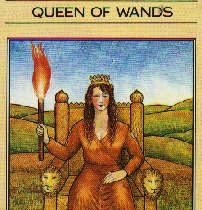
Consider the Queen of
Wands – she is a Queen by nature, but she must function in a Wands
environment. How does someone who is by nature caring and empathetic
function in an environment where assertion/aggression, adventure,
courage and ambition are ways of life?
The answer is: with
difficulty.
Here’s an example to
consider:
Picture the scene *does the wavy hands thing* we’re in a play park: A group of parents is sitting on benches chatting amongst themselves while their children explore all the exciting features – they are on swings, they are sliding down chutes, they are climbing over the frames, they are chasing each other.
Suddenly a wail rises through the conversations and laughter and the parents turn to see who is crying. A small child stands in tears, with knees scraped and bloodied after tumbling off the slide.
This child’s parent is
a Queen of Wands type.
The challenge that the parent faces is – do I kiss the knee and make sympathetic noises, give cuddles and dab away the tears (which would be Queenly) or do I encourage the child to shirk off the minor upset and run back to join in with the game again (Wands)?
A healthy Queen of
Wands knows when to kiss the knee and when to chivvy the child along.
In my forthcoming book,
Genetics of the Tarot Court (yeah, it’s not catchy, still working on
a title), the Queen of Wands lies on the same axis as another three
court cards who face equally challenging integrations of their nature
and nurture.
I hope that you’ll enjoy finding out who they are and the challenges that they face.
Stop being confused by court cards! Start being excited by the possibilities! Become a court card adventurer along with me 🙂 The Tarot’s Court Cards are my specialist area. They talk to me. Not LITERALLY though ….
Today is the Autumn Equinox and the ringing of this celestial alarm clock that tells us that the sun is heading south across the equator and that our nights will, once again, be drawing in.
Interestingly, the
period where the hours of almost equal light and darkness takes place
(for me here in Scotland, anyway) on the 25th of
September, but hey, what’s a couple of days between friends?
At the end of July, I
presented at TABI’s Tarot Conference in Birmingham, on working with
court cards. Today I want to share with you a snippet of the work
that we worked through at Conference: using the 16 courts as
Guardians to the festivals on the Wheel of the Year.
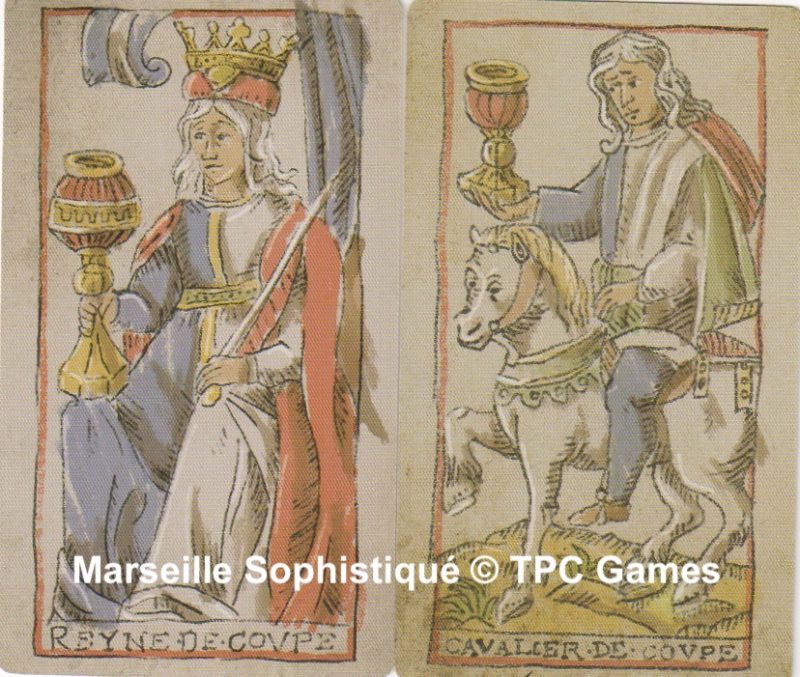
The Guardians of the Autumn Equinox are The Queen of Cups and the Knight of Cups. This abundance of watery energy means that this is a wonderful time of year for focussing on our relationships – with others and with ourselves. It is also a perfect time to pay attention to our dreams and our drive to create – art, books, music, children.
The Queen of Cups
offers us the gift of empathy, love (all aspects of it), and letting
your emotional core influence all aspects of your life in a way that
you might be reticent to do at other times of the year.
Her challenge to us is
to recognise when we turn that emotional connection with others into
something that is selfish or manipulative.
She asks:
Where can you improve your relationships with family, friends and colleagues Consider your self-care – are you investing sufficient time and resources? Are you aware of areas where you may be pushing emotional buttons to get your own way?
The Knight offers us a slightly different focus for the relationships in our orbit. His knightly nature is associated with the element of air, so he brings in a more cerebral note to his Guardianship and it can be used to support the Queen – if her emotionally orientated approach is not improving the connection with someone that you hope for, try flavouring your approach by adding a dash of Knightly logic, common sense or even double-check that you’re successfully communicating exactly what you mean!
The Knight’s challenge to us is different from his Queen’s: The Knight cares about his journey sincerely and with his whole heart. He’s not some fly-by-night to take-off in a fit of pique or hubris. The Knight’s challenge to us is to ensure that our questing and challenging nature pursues a worthwhile goal. When he is an active card, we should not be pushed out of our adventure by our need to maintain strong relationships with people. For example, you are going off to college (your worthwhile goal, right?) and your excitement is overshadowed by concerns about relationships that will be strained by your new adventure. A little sadness is healthy, but deciding not to go or amending your choices because you don’t want to upset your boyfriend is not.
He asks:
Are you willing to introduce adventure to your relationships? Where are others proving challenging? How well are you communicating with those around you?
If this kind of approach to working with the courts sounds like fun, why not sign up for my newsletter and get first notifications on when my court card e-book is going to be available? In it we look at the elemental DNA of the cards and how that helps us find other information that can be useful in interpreting court cards!
Stop being confused by court cards! Start being excited by the possibilities! Become a court card adventurer along with me 🙂 The Tarot’s Court Cards are my specialist area. They talk to me. Not LITERALLY though ….