Tag: Llewellyn

  • Review | Tarot by the Moon | Victoria Constantino

    Review | Tarot by the Moon | Victoria Constantino

    Tarot by the Moon by Victoria Constantino

    The latest book to drop with a satisfying thud onto the doormat here at Tarot Thrones Towers is Tarot by The Moon by Victoria Constantino (Llewellyn). I’m always on the search for new books to deepen my Tarot knowledge or widen my spiritual horizons, so I was eager to see what this book had to offer.

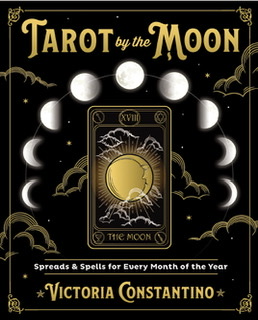
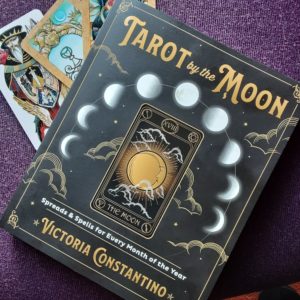
    Let’s start with the book’s vital statistics, shall we? Tarot by the Moon is a good-sized paperback, running to 240 pages (including the index); about the same dimensions as Mary K Greer’s 21 Ways To Read A Tarot Card. The cover artwork (see image above) by Kevin R Brown is very attractive with phases of the moon on a soft matt black background flanking a glossy Moon tarot card; it’s very tactile! Inside the book we have lots of spread illustrations and graphics in black and white.

    The author, Victoria Constantino, is a new name to me (but hey ho, I’m not exactly Ms Tarot filofax, so don’t read too much into that lol!) but she has a background in publishing and a slew of publications that includes poetry and fiction as well as a Master’s degree in Writing. Although her website biog confirms that she’s a longterm tarot practitioner, Tarot by the Moon is her first tarot book.

    So – it’s time to dive in!

    The book is laid out in chapters that are named after the months of the year along with the best-known full moon name for that month. For example, Chapter 1 is ‘January: The Wolf Moon‘ and carries on in that vein through to December (The Cold Moon) and then includes a chapter for The Blue Moon and then zooms off into some useful Appendices.

    But let’s just back up a little and focus on the Introduction which runs to 20 pages. In this section Victoria gives us a Tarot Ready Reckoner section for those who are perhaps new to card reading – how to use the book, a comprehensive outline on how to interpret the tarot that includes four pages on common tarot symbols (which is actually not bad for content at all!) and numerological correspondences before looking at days of the week and their planetary associations … and rounds off with the energetic qualities of the various moon phases (eg the dark moon being a good time for journey work, past life regression and so on). The introduction closes with an explanation of the more unusual moons – mini moon, super moon, blood moon etc.

    There is a lot of content in that Introduction, so don’t skim over it!

    Since it is almost November, I thought I’d focus on that month to see what the book could offer me. The full moon for the month is called The Beaver Moon and the chapter begins by linking the productivity of beavers (who are busy getting their dams in order at this time of year) to creating stability (important in a beaver dam!), getting your foundations right, clearing blocks etc.

    And this is how the chapters function throughout the book; Constantino paints a broad summary of the energies of that month’s particular moon, based on the Algonquin full moon name, and then crams the chapter with spreads and spells to help work with that energy. Of course, you don’t need to restrict ‘creating stability’ to the month of November – you are encouraged to dive in to any topic at any time, depending upon your own need and interests. I think that using the full moon names is an inventive way to group spells and spreads together.

    So, back to November. There are six tarot spreads, most involving 10 cards that allow you to explore productivity, stability, foundations, security, clearing blocks and a work and career spread to round things off. The chapter then delves into spells and rituals – summoning a perfect career opportunity, creating solid financial foundations and paving the way for success.

    Victoria gives recommended days and moon phases for the spells and rituals. They involve quite a lot of stuff – crystals, coloured candles, herbs and spices, coloured inks etc – so this isn’t really about just grabbing gear from your kitchen drawers and getting on with it. It’s about preparing, which is a vital part of RITUAL after all!

    Throughout the book there are side bar tips. For November it’s thinking about animal symbolism in tarot and automatic writing – which is fun, if you haven’t tried it yet! There are a lot of interesting snippets to explore – cleansing and charging crystals, what repeat cards might mean, the wisdom of flowers … just to name a handful.

    It was time to try out one of the spreads from November and since it’s Nanowrimo month … the productivity spread seemed like the obvious place to start. I’ll be writing up the actual reading in a couple of days time. In summary – I found the spread useful.

    Now I want to scoot ahead into the Appendices. Appendix A covers Meditations, B concerns amplifying your intentions (a full moon ritual), Appendix C takes a brief look at incorporating Feng Shui Ba Guas. And then we have a few pages for you to make your own Notes at the back.
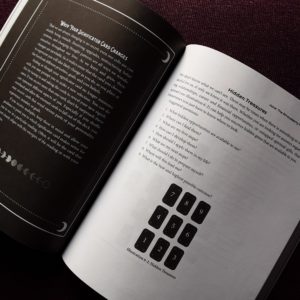
    A quick look at a spread and a tip from the selection provided for June.

    So, what do I think of it now that I’ve shown you around?

    First of all, I have not read every chapter prior to this review. I read the introduction, dipped into the other chapters and then worked through the chapter that I would be using for the coming month, by way of deeper example.

    It’s a book that dips into different belief systems – Native American, Wiccan, pagan systems and even forays into feng shui – which is a massive cultural arc but which works because the author does not focus too deeply on any one system – for example, the feng shui Appendix is about 200 words and a brief table. This is enough to whet your appetite if you want to explore further, but not too much that it bogs you down in detail. As Victoria says: “It is written from the belief that we are all one, that there is truth to be found everywhere – in every culture and belief system – and that we all share more similarities than differences.”

    I really like how the various full moon names have been the focus of the chapter contents. I think this is inventive and there is a lot of bang for your buck as far as spreads and spells are concerned (the book contains 66 spreads and 45 spells/rituals). However, if you buy it thinking that everything in the book is directly linked to something lunar, then you will be disappointed. It’s as it states on the cover: Spreads and Spells for Every Month of the Year.

    Who would enjoy Tarot by the Moon? Victoria says on her website that the book is: ‘the ultimate guide for seekers of wisdom, for those on the healing journey, and for anyone who wishes to become empowered in manifesting the life of their dreams’. For me, I think it’s fun for anyone who loves exploring new tarot spreads or who loves rituals to help them take action (and who also has a lot of crystals and that kind of thing around the house – which is not me lol!). It will be a useful resource if you want to work on specific areas of your life on an organised monthly basis, and I can see it being a neat first tarot book for someone who mostly does rituals – a nice way for them to expand into our crazy tarot world.

    You can find out more about Victoria on her WEBSITE.

    Book published on 2 November 2021 in UK, but e-book already available. Available from all good retailers – buy locally if you can!

  • Wizard’s Tarot | Rumi Quotes

    So, over on Facebook I try to do Interesting Things with court cards that help fellow readers become more confident with their court card work.

    My most recent week was spent in the company of The Wizards’ Tarot (Llewellyn) by Corrine Kenner which is a really pretty deck.  In fact, I must do a review of its courts for you one day soon.
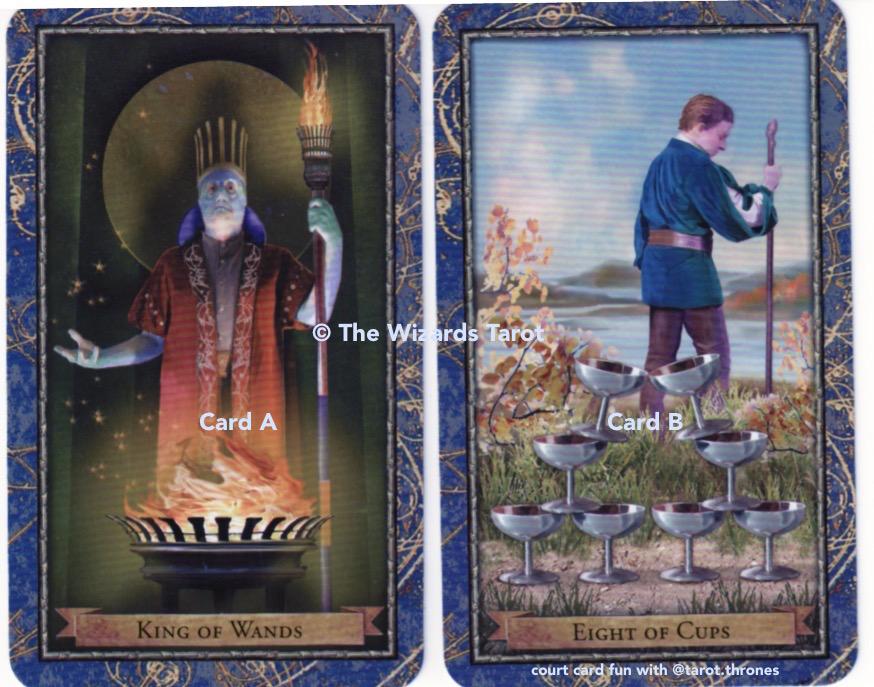
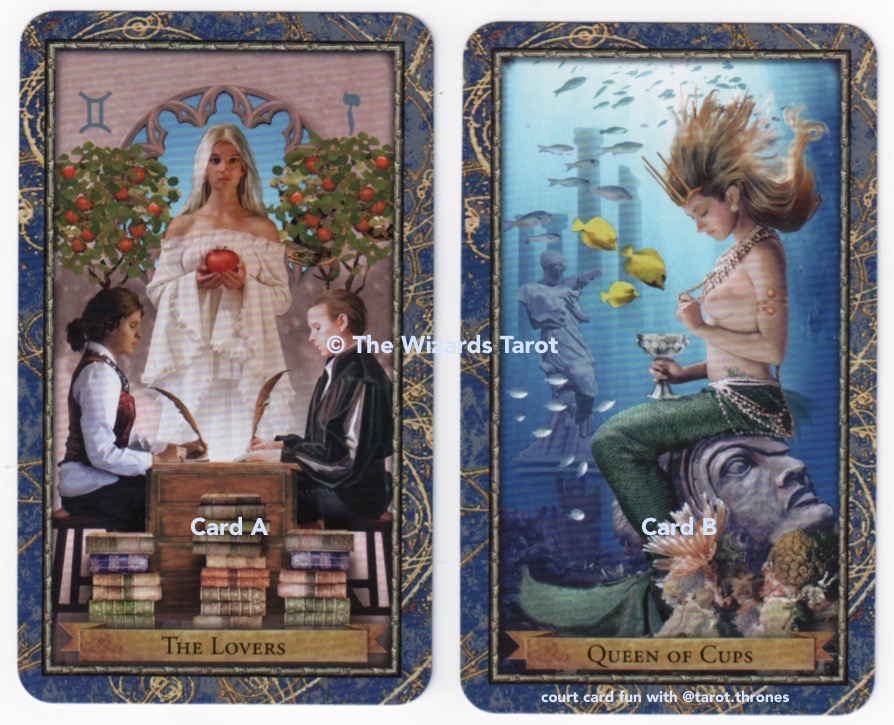
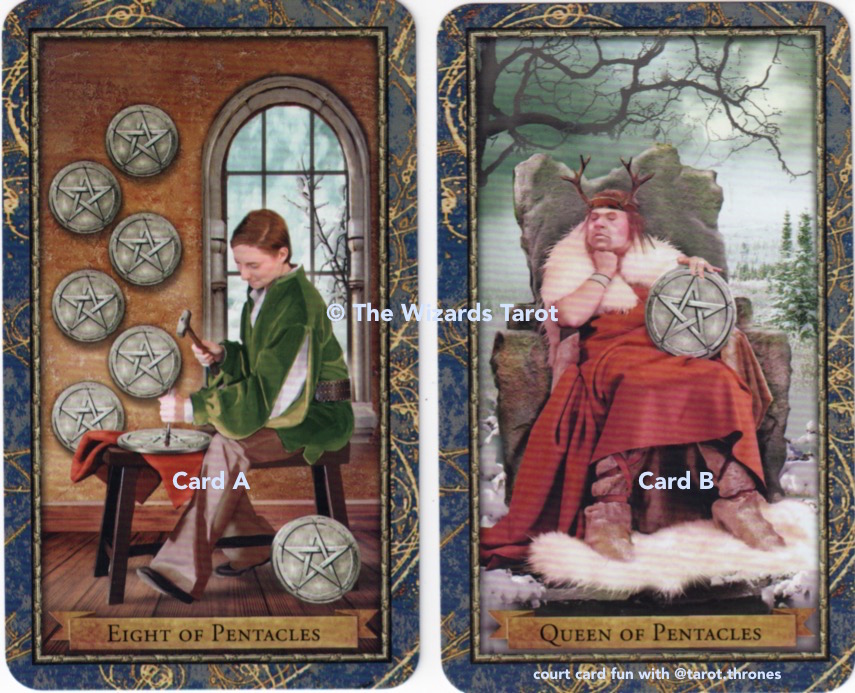
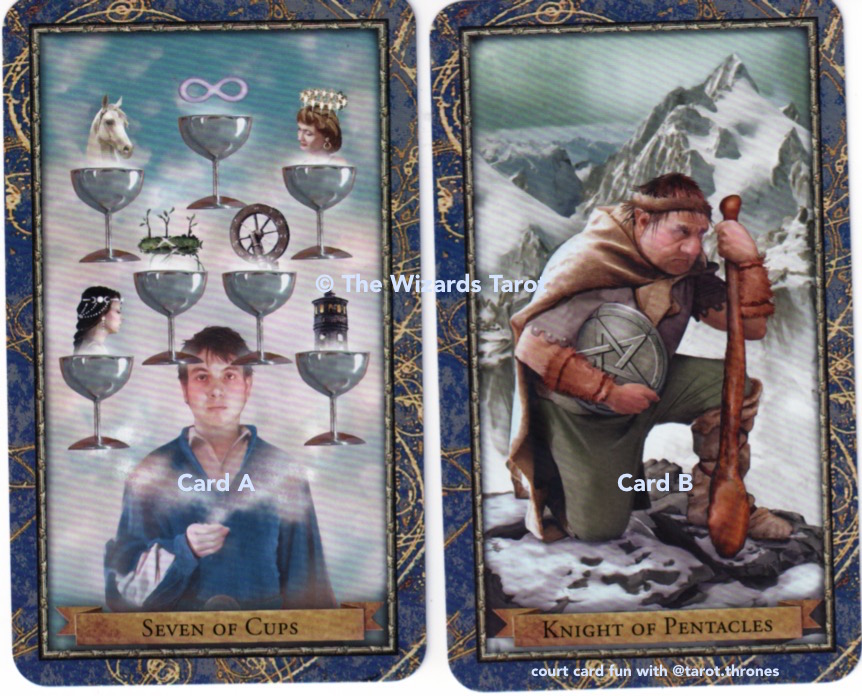
    Anyhoo, I decided to pair up court cards with cards from the rest of the deck and match them up with some lovely quotes by Rumi.  The exercise for all of the cards is ‘Card A helps with Card B’:

    Here we have the King of Wands paired with the 8 of Cups:


    ‘Set yourself on fire and seek those who fan your flames’ – Rumi
    The Lovers paired with the Queen of Cups
    ‘Let yourself be silently drawn by the strange pull of what you really love. It will not lead you astray’.     Rumi

    8 of Pentacles paired with Queen of Pentacles

    ‘Everyone has been made for some particular work (8 Pents), and the desire for that work has been put in every heart (Queen Pents).” – Rumi (well, not the bits in brackets!)

    7 of Cups paired with Knight of Pentacles
    There are many ways (7 Cups) to kneel and kiss the earth (Knight of Pentacles), just pick one of them and make a start! – Mostly Rumi <3

    If you like this kind of thing, I would love it if you could like @tarot.thrones over on the book of the face.

    If you’ve not encountered Rumi or The Wizards’ Tarot before, here are a couple of links.

    What do you think of the exercise – Card A helps with Card B? What do you think of the pairings – do they work?  

      
  • Full Moon | March | Virgo

    It’s that time of the month again, when the moon becomes full and we turn our attentions to the Court Card that bathes in its glorious light!  Yes, on 5 March, our Full Moon rides again!
    This month, the sun sign is Pisces and so our full moon lands in the opposite sign, Virgo.

    In Tarot, Virgo is represented by the Knight of Pentacles.


    I’ve saddled up a small collection of Knights for you to peruse.  Feel free to run your hands lovingly over their fetlocks…

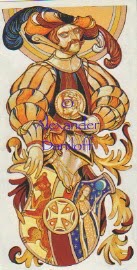
    Consider first the Knight of Pentacles from the Alexander Daniloff Tarot.

    In warm shades of russet and gold, he proudly sports an enormous hat and announces that he is an Earth sign by gently holding his coin like a trophy against his torso.

    He carries no weapon, just a money bag at his belt.  His only concession to his military rank is his shield and his helmet.  Items purely for defence.

    Let’s take another look at that hat.  It would not look out of place on the redoubtable Dowager Countess of Grantham:

    It features some outstanding feathers – reminding us that Knights have an airy and unpredictable component.  However, when married to the solidness of Earth, they don’t sit comfortably together.

    He can find his Knightly duties a little tough: He is called to be adventurous and an explorer, but he’d really rather do his exploring a little closer to home.  ‘Why try to conquer outer space when we have not yet understood our oceans?’ thinks this Knight.

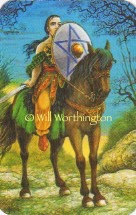
    In the Druidcraft we see him, almost shy, peeping over his shield as he rests his sword arm on his horse’s flank.  He’s in no rush to go anywhere.

    He is slow to anger or rouse to passion, but once his heart is engaged, he will not be swayed from his course.  He represents dogged determination and slow but steady progress.

    Of all the Knights that might set off looking for you, the Knight of Pentacles is the guy that WILL find you.  Yes, long after the Knights of Wands and Swords have galloped off on a new quest, long after the Knight of Cups rededicates his ballad to another fair maiden, no matter how long it takes, he’ll be there.

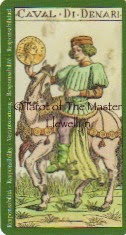
    In Lo Scarabeo’s The Tarot of The Masters, his keyword is ‘Responsibility’.

    The Knight of Pentacles can be a frustrated character – someone who longs to travel, but who is somehow prevented from doing so, either by home commitments, lack of finances or even health issues.

    Or he might be someone far from home who longs for the delights of her own fireside.

    This character is stubborn, the least flexible of the Knights, practical and single-minded in a way that the other, more exciting Knights are not.

    He directs us to:

    • Take on an adventure – even a tiny one!
    • Follow one project through to the end!
    • Explore new ways to make your money work harder (but not high risk!)
    • Try a new type of exercise – nothing too fast-moving!

    Sorry that it’s been a whole MONTH since I last posted.  I am still here reading and writing like mad.  I’m hoping that you’ll still drop by Thrones for a comfy chair and a coffee.  Maybe even Eccles cakes …

  • Shapeshifter Tarot | Review | DJ Conway, Sirona Knight and Lisa Hunt | Llewellyn

    I’ve not done a deck review for a long time, so here’s my review of Llewellyn’s Shapeshifter Tarot. And it will be a review primarily through the Courts! Oh yes, I like to make life tricky for myself 🙂

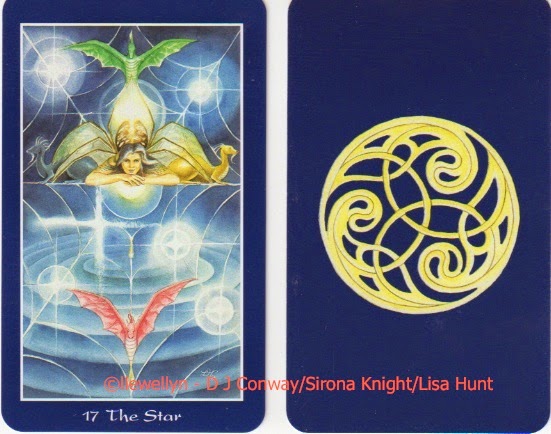
    Let’s get the basics out of the way:  This is the new version of the deck, not the original kit – so there is no accompanying book, just a LWB. The card size is 7 cm wide x 10.5 cm tall with a triskele as the card back design.  While it’s not a perfectly reversible image, it’s as close as makes no difference, so I’d say YES, this deck is suitable for reversals.

    The Star – Shapeshifter Tarot and Triskele card back

    There are 81 cards in this deck, in honour of the ’81 Knights of the 9 Rings of Condemanons Celtic Gwyddionic Druid Tradition’.  

    Other than that statement, there is very little in the LWB to explain further what this tradition is, nor where the authors recommend that you find out more.

    The additional cards are to be found in the Major Arcana, with the two additional cards stemming from the ‘energetic double’ of this particular Druidic tradition.

    The Majors themselves are mostly renamed, but won’t cause any headaches for anyone familiar with the RWS.  All the cards, including the Majors, are numbered with Arabic numerals, so they’re immediately accessible.

    The Minors each have their suit details at the top of each card and the number and keyword along the bottom.  The images themselves are surrounded by a dark blue border (same shade as card-back) and provides a great ‘neutral’ for Hunt’s images.

    Now to the Courts!

    We have 4 Court cards for each of the suits:  Water, Earth, Fire and Air, with the Air suit attributed to the traditional ‘Wands’ and Fire to Swords.  So be warned if you like your Air and Fire attributions the other way around 🙂

    The Courts themselves are renamed in the LWB:

    Page = Seeker
    Knight = Warrior
    King = God
    Queen = Goddess

    According to the LWB, the change in priority, with Goddess at the top of the tree, reflects the Gwyddion system where the High Priestess has the final say in all matters.

    As with the other cards of the deck, the Courts show figures in transformation to another shape where centaurs and unicorns mix with white harts and bears.  Each image is beautifully rendered in the delicate water-colour shades associated with Hunt’s work, really lovely to look at – dreamlike and full of detail.

    In the LWB each Court figure is named according to Celtic myth – there is Bridget, Angus mac Og, Ceridwenn and a whole host of recognisable names.  However – and this is a MASSIVE however, the LWB is stonily silent on the relationship of those Celtic heroes to the Court figures AND there is not a breath of a mention as to what the shape-shifting animal might contribute to our understanding of the card.

    I reckon that this might be because the deck was originally available in 1998 as a book/deck set from Llewellyn and in order to fit everything into the smaller box for this smaller edition, the book has been whittled to within an inch of its life!

    The result is that you have a beautiful deck but one whose accompanying book has had most of the meat removed and we’re left the bare bones of structure.

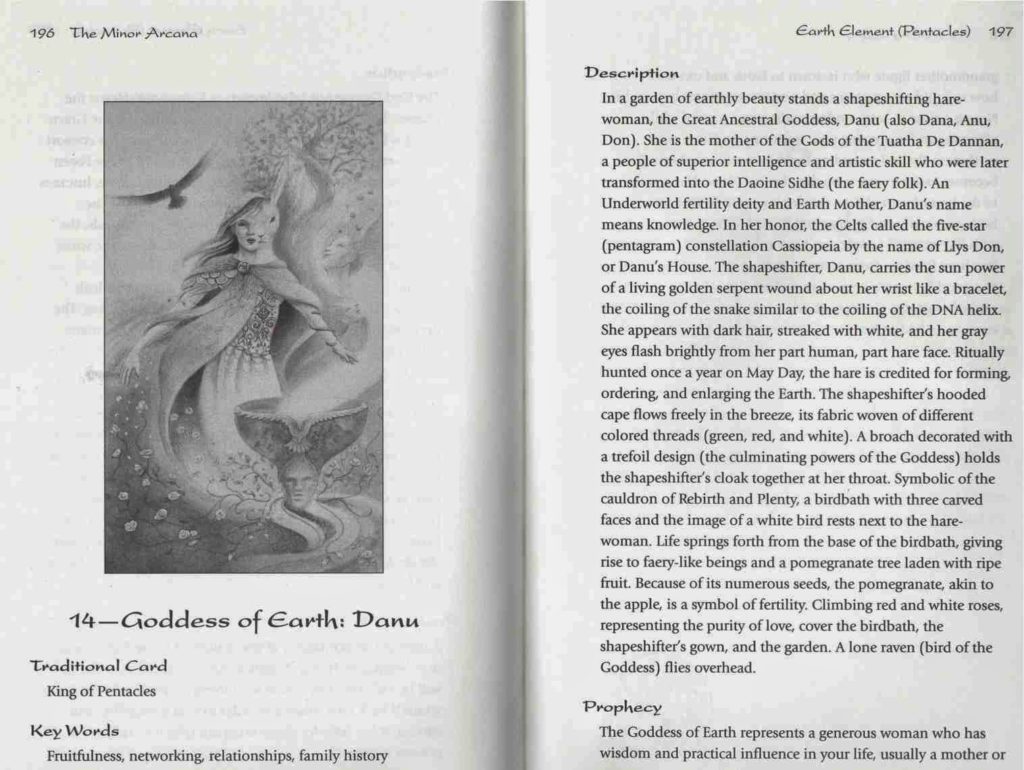
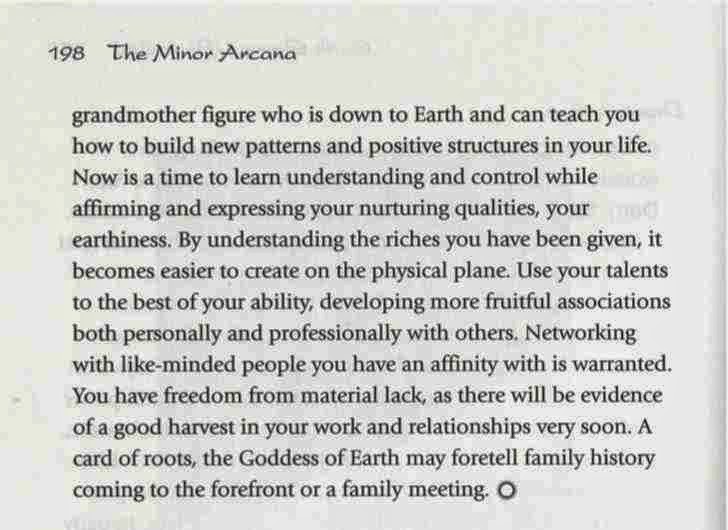
    To illustrate, I managed to procure a copy of the original accompanying book’s information about The Goddess of Earth (thank you Emma Sunerton-Burl) and provide it here purely to illustrate the quantity of work that has had to be omitted for the non-kit edition:

    This is the information provided for the Goddess of Earth from the original accompanying book.

    See? Massive difference in the quantity of information provided.  The answer? Somehow get your hands on the original accompanying book.

    So – in summary – I absolutely love the artwork and the concept behind this deck, but without the original accompanying book, you are left with lots of unanswered questions.  Come on Llewellyn – let people buy the accompanying book as a pdf download!! 😀

  • AnnaK Tarot | Deck Review

    Oh this is loooooovely!

    Originally self-published in 2009, the
    AnnaK tarot has now been taken up by Llewellyn – thank goodness,
    because it’s a charming little deck that deserves to be widely
    seen.

    It arrives in a nice presentation box
    along with a chunky little accompanying book of 230 pages. Not every page of the 230 is filled with writing – some are blank (well, they are lined for you to write on)  and 78 of them are the card illustrations themselves. Each
    card is illustrated in B&W with the
    interpretations on the facing page, sometimes including a little tip from Anna. 
    The deck measures 7cm x 11.5cm (3″ x 4.5″ in
    old money!) and is of thin – but beautifully slippy – card stock
    which ensures the deck shuffles like a dream from the start. 
    With an her World tree motif on the
    back (see scan below), the cards can easily be used for reversals.
    Anna K touches on reversed meanings in her accompanying book, but they are not integral to her
    use of the deck.
    Having the cards bordered in black
    really makes the colours of the deck really pop – golds contrast
    magnificently and dark cards are, erm, darker. 

    As far as card names go, no great
    changes here – suits are Swords, Rods, Pentacles and Cups with the
    Majors as you would expect (note: Strength is XI and Justice is
    VIII)
    The book also contains hints on how to read, as well as some of Anna’s own insights into using Tarot – and some spreads for you to play with too, of course!

    *rubs hands together*  Let’s dive in!
    The deck is based on the Rider Waite
    Smith and if you can read with the RWS, then you can read with the
    Anna K. It’s not a simple clone though, there ARE cards that Anna
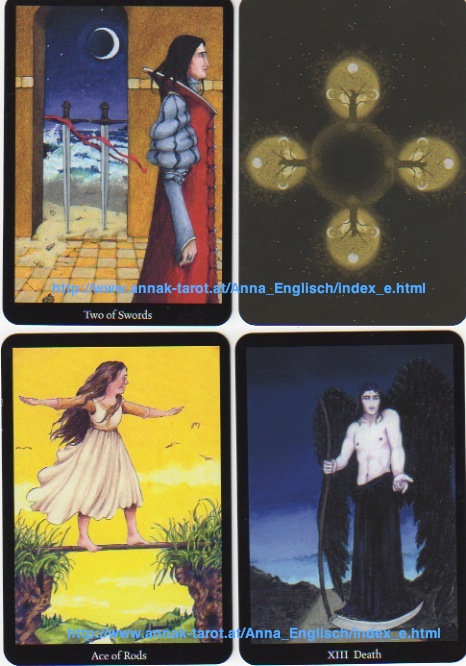
    has depicted in a different way to the RWS – the 2 of Swords for
    example (see above).

    Despite this rooting in The Golden Dawn, Anna has
    pared back the occult symbolism. For example, there is no mention
    made of any astrological associations for the cards. However, the suits ARE
    accorded elemental associations (eg Rods are related to Fire) and the
    ranks of the courts are Page, Knight, Queen and King.  

    Each Page is depicted as a very
    young person involved in recreational activity that one might
    associate with the suit.  For example, the Page of Swords is
    practising with his Sword (literally, striking at a straw man!)
    and the Page of Wands gazes longingly over the restraining wall of his compound.
    Anna says that the Pages are ‘invitations to cultivate certain
    attitudes’.
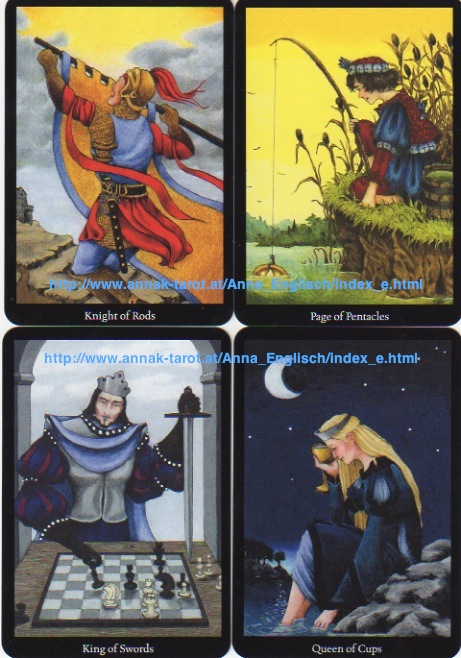
    The Knights are interesting because
    they are not on horses (or creatures of any kind!) Anna does
    provide sufficient symbolism that you can quite easily read what the
    Courts are about. Our Knight of Rods for example, is running (just
    as he would be on his horse) with a cloudy sky behind (perfectly
    fitting the Knight’s blustery ‘rush-in’ attitude) with a banner in
    hand – a banner that obscures the perilous path that he is running
    along!
    The Queens, like the Kings, are not
    depicted on thrones. Intriguingly, the Queens are all depicted
    outside, in nature – representing ‘values or habits’. Conversely,
    the Kings are all depicted indoors (with the active King of Wands
    striding towards the outdoors!) and show outer life or actions.
    ‘Well, this is all GREAT’ you might be thinking, ‘but whaddya REALLY think of
    the deck?’
    Truthfully, I really like it. It’s perfect for a
    beginner, freeing you from the confines of Golden Dawn inspired ‘bolt ons’ such as astrological associations and complex
    alchemical/hermetical symbolism which are often not needed in a Tarot
    reading.
    Anna works from her imagination, the
    figures are not taken from life and while most of the illustrations
    are attractive (especially Death – he’s totally smokin’ hot btw!)
    her emphasis is on the card’s character’s emotion and expression, so
    if you like all your figures to be pretty and serene, this lively
    little collection might not be for you.
    To find out more about the deck, visit Anna K’s site:  This is the English language version site (Anna K is Austrian)