Category: Uncategorised

  • Knight to King: Check your mate!

    Tartarus as he is today –
    Still clutching a motorbike wheel!

    So, I started dating my other half when we were at school.  At that point he was a clever, bespectacled lad with a bit of a wild side.  The specs were soon ditched for contact lenses and as soon as the school blazer was abandoned, he embraced motorbikes with messianic fervour.


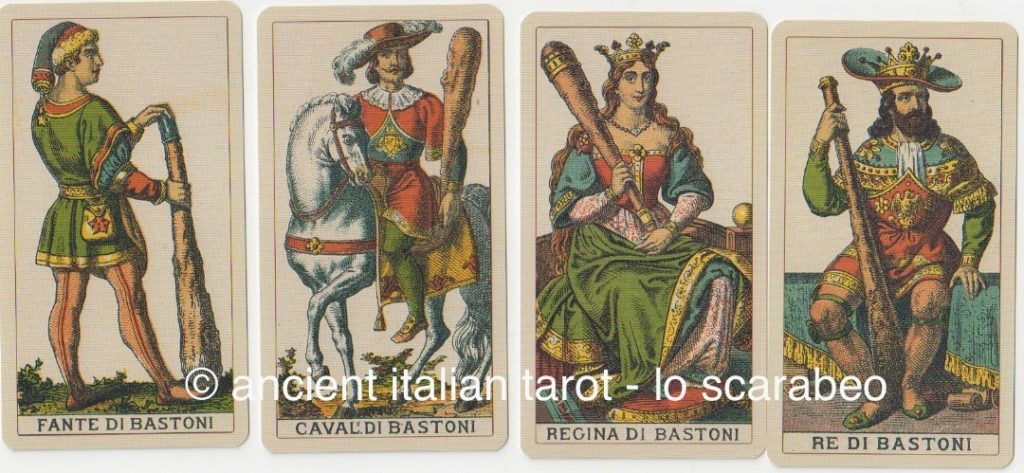
    The Knight of Wands


    He was, as Lord Byron once put it, ‘mad, bad and dangerous to know.’  Well, he wasn’t mad.  But two out of three ain’t bad.  As St Meat of Loaf once put it.

    He joined the merchant navy and headed off to see the world.  He came home tanned and wore his hair, as you can see here, in a mullet.  In his defence, it WAS the haircut du jour.  He also liked to wear sleeveless (fairly tight) t-shirts to show off his tanned and toned bits and bobs.  Dear reader, he was quite the catch.

    He rode a big motorbike.  He worked hard and played equally hard – AC/DC was his drug of choice and, dear reader, to a girl who listened to nothing but Kate Bush it was THRILLING!!!

    Of course, being somewhat bookish and conservative by nature, I wasn’t too keen on strapping my legs cross his velvet engines (as the Blessed Bruce recommended) preferring instead to persuade my long-suffering dad to drive me to wherever it was we were meeting in his permanently filthy orange Opel Ascona.  I wasn’t exactly high-ranking on the cool charts.

    So what did he see in me?  Possibly the challenge of conquest.  He wooed me with gifts from his foreign travels – expensive perfume from distant airports, cowboy boots from America, silk pictures from the Orient, gold and pirated music cassettes from the Middle East….

    It fairly turned a girl’s head.

    Fast forward 30 years *does the wobbly time-shift hands thing*

    He still has hair, but the only mullet that he will ever see is one slightly steamed and served up to him on a plate with some boiled potatoes.  He’s still tanned.  But he avoids anything that might cling to his….physique (he likes his food!).

    Somewhere along the way, he also seems to have morphed into some kind of Silverback gorilla.  When he’s shaving, he has to decide where to stop before he starts, otherwise he’ll still be shaving at his navel.

    He has become very successful at what he does – marine engineering.  He was the youngest Chief Engineer in his Company *swells with pride face*

    Tartarus understands money.   He has bookmarked the thisismoney website and regularly shifts money from one account to another to maximise the interest.  Reader, he understands Equity Bonds.

    I can barely cope with different James Bonds.

    Without a doubt, he’s a Man’s Man.  Apostles Men regularly make the pilgrimage to our garage for car/motorbike/boat engine advice and treat it with the same reverence as one might the pronouncements of a Harley Street surgeon.

    He’s an exceptionally hands-on sort of man and has somehow developed the skills to lay a patio, build a garage, fit a kitchen and…. if I’m really honest….he’d rather repaper our bedroom these days than set it on fire with passion 😀

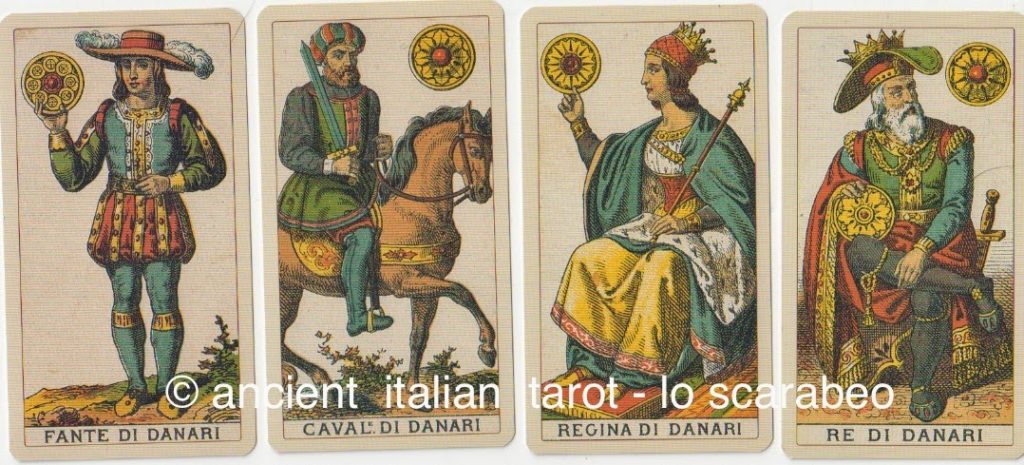
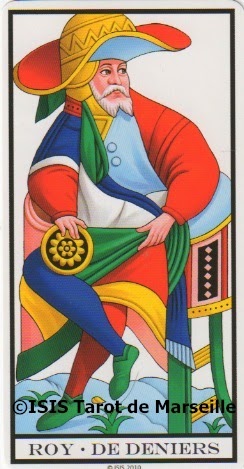
    Dear Reader, my lovely Knight of Wands has turned into the King of Pentacles.

    I, of course, am still the same radiant slab of Queen of Wands gorgeousness that he married……

    How has your partner changed since you got together? What card represented them at the time and what have they grown into? And what about YOU?!

  • The Poet’s Tarot | Annette Spaulding-Convy & Kelli Russell-Agodon

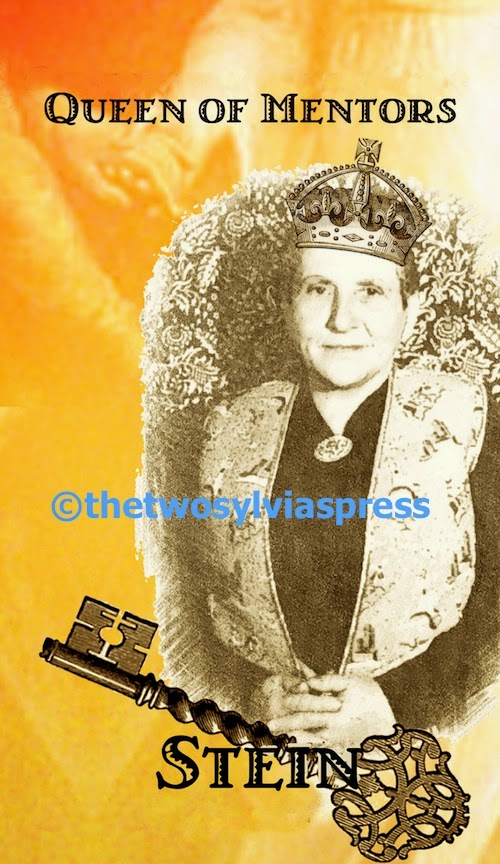
    Queen of Mentors – Poets’ Tarot
    Time to delve into a new Tarot deck via its Page of Swords! Except for The Poets’ Tarot, it’s the Queen of Mentors that we’re looking at.  Worry not, all will become clear 😀 

    The Two Sylvias Press ran a successful Kickstarter campaign to fund The Poets’ Tarot.  The two women behind the deck, Annette Spaulding-Convy (ASC) and Kelli Russell-Agodon (KRA) very kindly agreed to talk about their newly launched baby!
    Me: OK
    – first of all tell me about the Two Sylvias Press – what or who is
    it?!   


    KRA: Two Sylvias Press is an independent press Annette Spaulding-Convy and I began in 2010 in a sort of accidental way.

    We each had eReaders and one night on a ferry ride home from a poetry reading, we were talking about how there weren’t any eBook anthologies of women poets and how we wished there were more poetry collections available for Nook and Kindle. We continued to talk about how this concerned us and by the end of the ferry ride, we had decided to create an eBook anthology of contemporary women’s poetry ourselves—this is how Fire On Her Tongue: An eBook Anthology of Contemporary Women’s Poetry was born. Creating Fire On Her Tongue led us to cofounding our own press, Two Sylvias Press, as we realized we’d like to do more creative projects and that we had ideas for books we’d like to see in the world.

    Since that evening on the ferry, we’ve turned the Fire On Her Tongue anthology into a corresponding print book as well as published a book of poetry writing prompts (The Daily Poet: Day-By-Day Prompts For Your Writing Practice), three eBooks of poetry, one print book of poetry, and one eBook memoir. We publish in both print and/or eBook works we’d like to read ourselves. We want useful, creative, innovative books and more art in the world. We believe in the “passion” project, following our instincts, and doing what we love; this is how the tarot deck came to be.

    Me: Amen to having more art in the world! So, tell me about your Tarot background?

    KRA: I was introduced tarot cards about fifteen years ago by a good friend and was instantly intrigued by them. I have several decks of tarot cards which I use when I need guidance or inspiration in my life. One of the first decks I remember being introduced to was the Renaissance Tarot Deck. In creating The Poet Tarot, Annette and I wanted the artwork on the cards to have a vintage, retro, Victorian, and almost Steampunk feel.

    For The Poet Tarot, I did all the graphic design as overall, I am probably less knowledgeable in the history, tradition, and specific meanings of the cards, but I have always been interested in the art of each deck. Now, I keep The Poet Tarot on my desk to reach for as I write.

    ASC: I was first introduced to Tarot when I was in college. A good friend of mine had the Aquarian Tarot deck and she not only read the cards for me, but also taught me several layouts as well as both traditional and esoteric meanings for the cards. What most impressed me was her intuitive sense when she gave a reading. She consulted her various books, but sometimes she would depart from the card’s meaning and she would share her own interpretation, which in the end, was often fairly accurate in terms of the querent’s life or situation.

    I have always owned several decks of cards—Tarot based on fairytales, mythology, and of course, the traditional Rider-Waite deck. I’ve occasionally given readings for other people, but mostly I have used the cards as a private psychological and spiritual tool to give me creative insight. I don’t at all consider myself adept with the Tarot, but have always been fascinated by its archetypal symbols.

    Me: Why have you created a Tarot based on poets?

    KRA: I have always appreciated the opportunity to slip poets and poetry into our lives in unique ways, and for me, the Poet Tarot was a way to do that. I feel the cards offer beauty and art into the world, but are also something that encourages others with their own creative projects. I like that along with being a larger art project itself, The Poet Tarot also helps inspire and support other writers and artists with their own work.

    ASC: The Poet Tarot really came seemingly from a dream and a few creative visualisation exercises. I simply awoke one morning and thought—wouldn’t it be amazing if there were a tarot deck made up completely of poets. As I thought more about it, suddenly the suit cards became symbols of the creative process—the way a creative idea (poem, story, painting, song, etc…) moves from inspiration to realisation to revision to completion. As Kelli and I talked about the idea, we began to see the deck as a potential tool for artists and we were excited about showcasing some of our favourite deceased poets. Kelli took on the visual art and graphic design aspect of the cards while I worked on the guidebook and further hammered out the cards’ meanings. We wanted the deck to align with the traditional tarot, but with some differences, so it wouldn’t be just another Tarot “knock off.”

    Me: Tell me about the deck – I know that it was a successful Kickstarter project, but I need the details!!

    ASC: The deck follows the major arcana with 22 poets representing the traditional cards. We chose poets to represent each card based on the poet’s personality, life, and the thematic elements of his/her poetry. Edna St. Vincent Millay is a great representation of the Wheel of Fortune (X) because of the almost cyclical nature of her artistic career. She began with much immediate success (a Pulitzer Prize) and due to both her own personal issues and certain circumstances, within ten years she was barely writing and on the fringe of the poetry world. E. E. Cummings makes a wonderful Fool (0), not so much because of his personal life, but because of his poetic experimentations (simple subjects, use of lowercase, lack of punctuation), which led to many critics brutally ridiculing him. But, Cummings is now considered one of the most innovative poets of the twentieth century. We had fun matching poets with the traditional major arcana cards and we were careful to include some historic individuals as well as many twentieth century writers. It was also important to us to have an equal number of women and men represented.

    In terms of the minor arcana, the traditional suits were changed to symbolise the various stages of the creative process—Cups turned to Muses (inspiration), Wands became Quills (creation), Swords morphed to Mentors (revision), and Pentacles/Coins changed to Letterpresses (completion). For instance, the Seven of Quills is concerned with how a writer or artist deals with competition. It’s no surprise that we end up competing against fellow writers and artists when it comes to chapbook prizes or gallery space. This card explores how we handle competition in a healthy way without it impacting our creative wellbeing. As in a traditional Tarot deck, our major arcana is more in-depth and philosophical, while our minor arcana deals much more with the nitty-gritty and practicalities of the creative life.

    We are thrilled that our Kickstarter campaign to raise funds for the production of The Poet Tarot has been so successful. We nearly received twice the amount of our original goal and our supporters have been so generous in terms of Tweeting and Facebooking about the project. Although Kickstarter is over, The Poet Tarot is available for sale on our Two Sylvias Press website: www.twosylviaspress.com

    Me: Tell me about your Court Card structure – there are fewer Courts than in most other decks, am I right?

    ASC: For the court cards, we decided to simply have a Queen and a King reign over each suit. We carefully chose two poets (one woman and one man) who best embody a given stage of the creative process. Perhaps if we do a future revision of the deck, we might include the Page and Knight, but for now, we’re happy with our powerhouse Kings and Queens! Two of my favourite pairings are the King and Queen of Letterpresses (the traditional Pentacles suit)—Walt Whitman and Queen Elizabeth I. Queen Elizabeth I was highly educated and wrote verse, and of course, was an amazing patron of the arts. Always inventive and resourceful, Walt Whitman, ended up printing Leaves of Grass himself at the local print shop when no one else would publish it. He also started his own solo newspaper and took on every production role from reporter to printer to delivery man. They are both powerful examples of the “completion” stage of the creative process.

    Me: The meme here on Tarot Thrones usually focuses on artists talking specifically about their Page of Swords, but you don’t have one! Instead we are talking about your Queen of Mentors – Gertrude Stein. Tell me all about this card! Why did you select her to represent this Queen? What does she represent in a reading?

    ASC: Certainly most people are familiar with the great Gertrude Stein (a rose is a rose is a rose) and if you ever had to study some of her poetry, well, you might have become a little frustrated! I chucked her book of poems out of my dorm window in college and then had to retrieve her from a puddle of rainwater.

    Gertrude Stein is the perfect woman to represent the Queen of Mentors (which is traditionally Swords). In The Poet Tarot, the Mentors suit deals with all aspects of revision in the creative process. Few of us ever get a poem or painting completely right in its initial form, but we usually rethink, reevaluate, and make changes before we feel it is a complete and true representation of our initial idea. Sometimes we revise in isolation, but many times as artists we are part of a creative community, and so we often seek feedback on our writing or art piece. We must then decide whether to use that critique to change our work or we may choose to dismiss the feedback. And sometimes we are in the position of critiquing someone else’s art or writing, and therefore, we have an obligation to evaluate carefully with honesty and objectivity.

    Following the first World War, Gertrude Stein’s famous house in Paris was a haven for experimental and groundbreaking visual artists and writers. She generously critiqued their work and she was trusted because she had a keen eye and an amazing amount of insight and objectivity. She helped launch the careers of Hemingway and Fitzgerald, as well as Picasso and Matisse. If you draw the Queen of Mentors in a reading, you are being encouraged to work on your skills as an insightful critic—putting away emotionalism and sentimentality in favor of logic and objectivity. Stein could be overly harsh, so there is a warning about delivering feedback by balancing creative support with honest assessment. This card also encourages you to seek out exciting groups of artistic individuals, to maybe host a Gertrude Stein style “salon” in your home or studio, where artists bring their artwork and discuss it, where writers bring their poems and stories and read them aloud. The Queen of Mentors encourages you to be generous and thoughtful as you help fellow artists realize their full potential.

    Me: I’m not familiar with all the poets on your cards, do Tarotists need to know about the poets in order to use the deck?

    KRA: No, you don’t need to be familiar with the poets to use the deck at all. Annette did an incredible job writing the guidebook to create a description for each card that introduces you to a bit of the background of each poet before moving on to explain the card’s meaning. I created the cards based on what they represented and the background of the poet. For example, I included a “bell jar” on Sylvia Plath’s card, as that was the title of one of her books; however the image still enhances the card and can be something to meditate on if you choose.

    I also think that not knowing a poet can offer you more in a reading as you come to the card with “Beginner’s Mind”—that place where you are open, curious, and ready to learn. I guess my hope is that people who aren’t poets or writers and who use the deck may find a poet mentor or a new poem that will inspire them, or maybe they will connect with a poet they hadn’t even known existed before they bought the deck. I think more art and poetry in everyone’s lives only makes the world a better place.

    Me: I’m very curious about the creative process for Tarot artists – how do you both work? Does one come up with the concept and the other executes it?

    KRA: In our case, while Annette initially came up with the concept, we both participated in creation of the deck and guidebook. I have always been interested and played around in graphic design. Annette has a much stronger understanding of the individual cards, meanings, and history.

    We each worked separately, but also together. We created a list of poets, then determined which poet would best represent each traditional card. For example, Emily Dickinson as the Hermit was a quick and easy choice; choosing Anne Sexton as the Empress was a little harder. Once we had all the poets chosen, Annette sent me a list with what each card meant, including the suit cards.

    As a poet, I see the world in metaphor, so converting my interpretation of each card’s meaning to a visual image was actually not too difficult and I found that I enjoyed the process. These cards were a delight to create and I loved having the opportunity to “bring these poets back to life” with each image I created. It fulfilled me as both an artist and a poet.


    Me: Thank you so much for your time!  The Poets’ Tarot is such an interesting and unusual concept – I wish you tuns of luck with it!

    If you’d like your own copy of The Poets’ Tarot, you can order it here:

  • Beltane Spread 2014

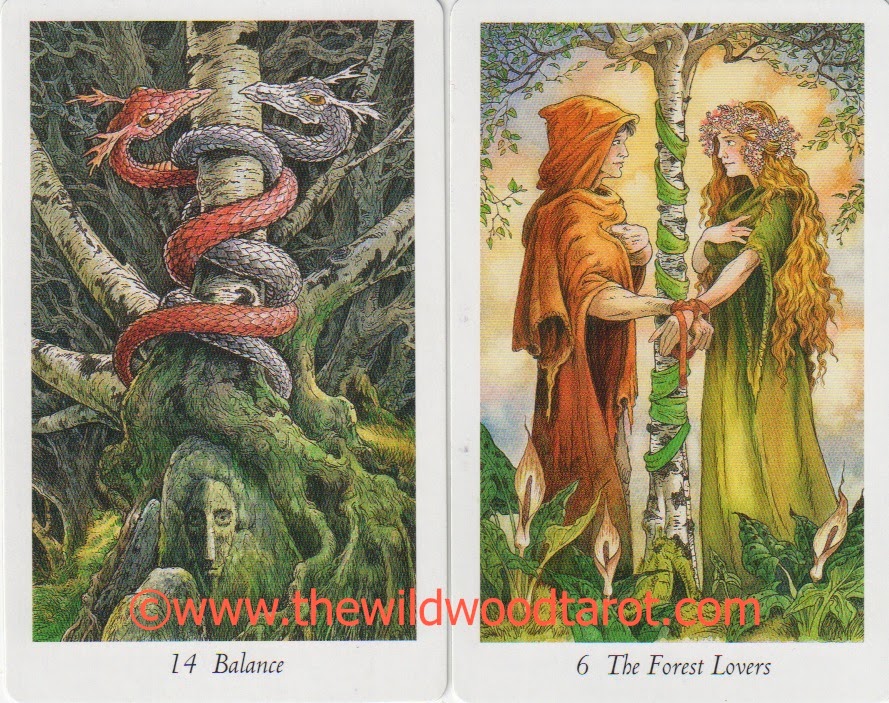
    The Beltane cards from The Wildwood TarotClick on link to visit their Beltane post on facebook
    but don’t go yet! Stay and read m’spread!

    Beltane is one of the ancient festivals that has managed to hang on in modern consciousness via a variety of little traditions – In Scotland, for example,  girls will have been nipping outside to wash their faces in the morning dew.  I did that this morning, but it was mainly rain, I think!

    This is a big Fire Festival and also associated with The Great Rite – fire and creation – fabulous combination!!

    So I dreamed up a little spread that you might find useful:

    The Beltane Spread

    First of all, split your deck into the three Arcana:  Majors, Minors, Courts.

    Card 1: (drawn from the Major Arcana) – Where am I burning to create?

    Card 2:  (drawn from the Court Arcana) – Whose energies will help me make this creation possible?

    Card 3: (drawn from the Minor Arcana) – How I make it happen?

    Here are my cards, to help you along!

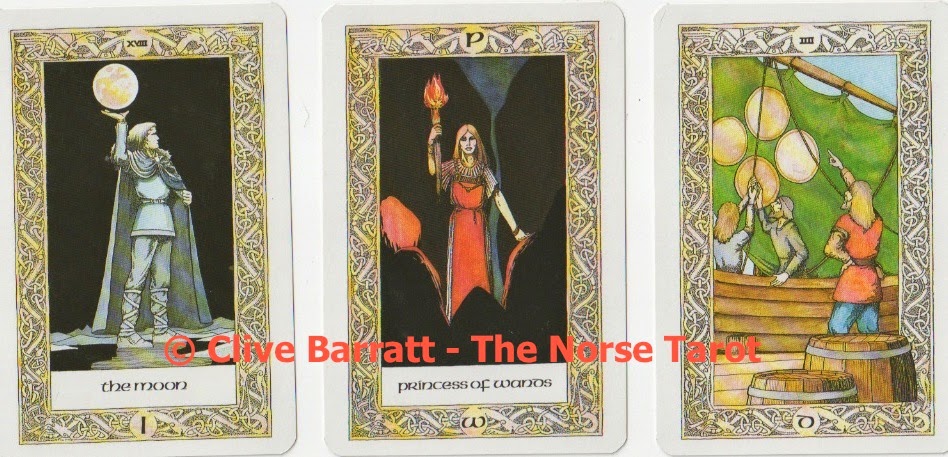
    The Moon – Princess of Wands – 4 Pentacles
    Card 1:  Where am I burning to create? 
    The Moon here tells me that I burn to create something very imaginative, something that makes people think of familiar things in a new light.  But which ideas have got legs and which are destined to remain in my imagination?!
    Card 2:  Who helps me?
    The Princess of Wands offers me her mindset:  Worry less and just bloody well get started on something – make a beginning, make an ACTIVE and PASSIONATE beginning and offer up a light in the darkness.
    Card 3:  How do I make it happen?
    The 4 of Pentacles – golly, what a tricky card to receive in this position!  I associate the 4 of Pentacles with focussing (wrongly) on money, but in the image on the Norse, we see someone who is making all necessary preparations for a journey – directing the hoisting the sail.   But the cargo is still on the pier!  I think that this card is warning me against placing my focus on ‘getting organised to go’.  Procrastination is my deadly enemy!  I will be drawn to making sure that I have EVERYTHING I need to get going…. and not actually GO 😀
    How does this spread work for you today?  I’d love to hear your own cards and input into my own reading too!
  • Shapeshifter Tarot | Review | DJ Conway, Sirona Knight and Lisa Hunt | Llewellyn

    I’ve not done a deck review for a long time, so here’s my review of Llewellyn’s Shapeshifter Tarot. And it will be a review primarily through the Courts! Oh yes, I like to make life tricky for myself 🙂

    Let’s get the basics out of the way:  This is the new version of the deck, not the original kit – so there is no accompanying book, just a LWB. The card size is 7 cm wide x 10.5 cm tall with a triskele as the card back design.  While it’s not a perfectly reversible image, it’s as close as makes no difference, so I’d say YES, this deck is suitable for reversals.

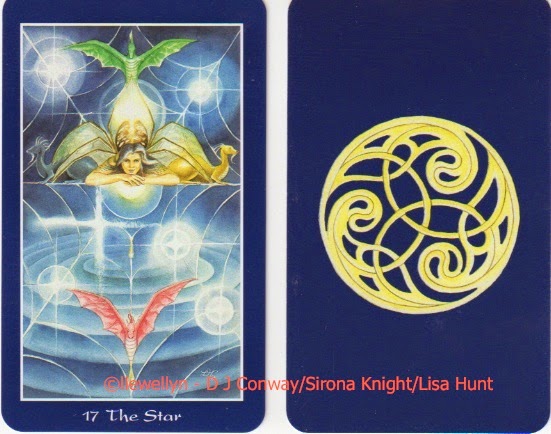
    The Star – Shapeshifter Tarot and Triskele card back

    There are 81 cards in this deck, in honour of the ’81 Knights of the 9 Rings of Condemanons Celtic Gwyddionic Druid Tradition’.  

    Other than that statement, there is very little in the LWB to explain further what this tradition is, nor where the authors recommend that you find out more.

    The additional cards are to be found in the Major Arcana, with the two additional cards stemming from the ‘energetic double’ of this particular Druidic tradition.

    The Majors themselves are mostly renamed, but won’t cause any headaches for anyone familiar with the RWS.  All the cards, including the Majors, are numbered with Arabic numerals, so they’re immediately accessible.

    The Minors each have their suit details at the top of each card and the number and keyword along the bottom.  The images themselves are surrounded by a dark blue border (same shade as card-back) and provides a great ‘neutral’ for Hunt’s images.

    Now to the Courts!

    We have 4 Court cards for each of the suits:  Water, Earth, Fire and Air, with the Air suit attributed to the traditional ‘Wands’ and Fire to Swords.  So be warned if you like your Air and Fire attributions the other way around 🙂

    The Courts themselves are renamed in the LWB:

    Page = Seeker
    Knight = Warrior
    King = God
    Queen = Goddess

    According to the LWB, the change in priority, with Goddess at the top of the tree, reflects the Gwyddion system where the High Priestess has the final say in all matters.

    As with the other cards of the deck, the Courts show figures in transformation to another shape where centaurs and unicorns mix with white harts and bears.  Each image is beautifully rendered in the delicate water-colour shades associated with Hunt’s work, really lovely to look at – dreamlike and full of detail.

    In the LWB each Court figure is named according to Celtic myth – there is Bridget, Angus mac Og, Ceridwenn and a whole host of recognisable names.  However – and this is a MASSIVE however, the LWB is stonily silent on the relationship of those Celtic heroes to the Court figures AND there is not a breath of a mention as to what the shape-shifting animal might contribute to our understanding of the card.

    I reckon that this might be because the deck was originally available in 1998 as a book/deck set from Llewellyn and in order to fit everything into the smaller box for this smaller edition, the book has been whittled to within an inch of its life!

    The result is that you have a beautiful deck but one whose accompanying book has had most of the meat removed and we’re left the bare bones of structure.

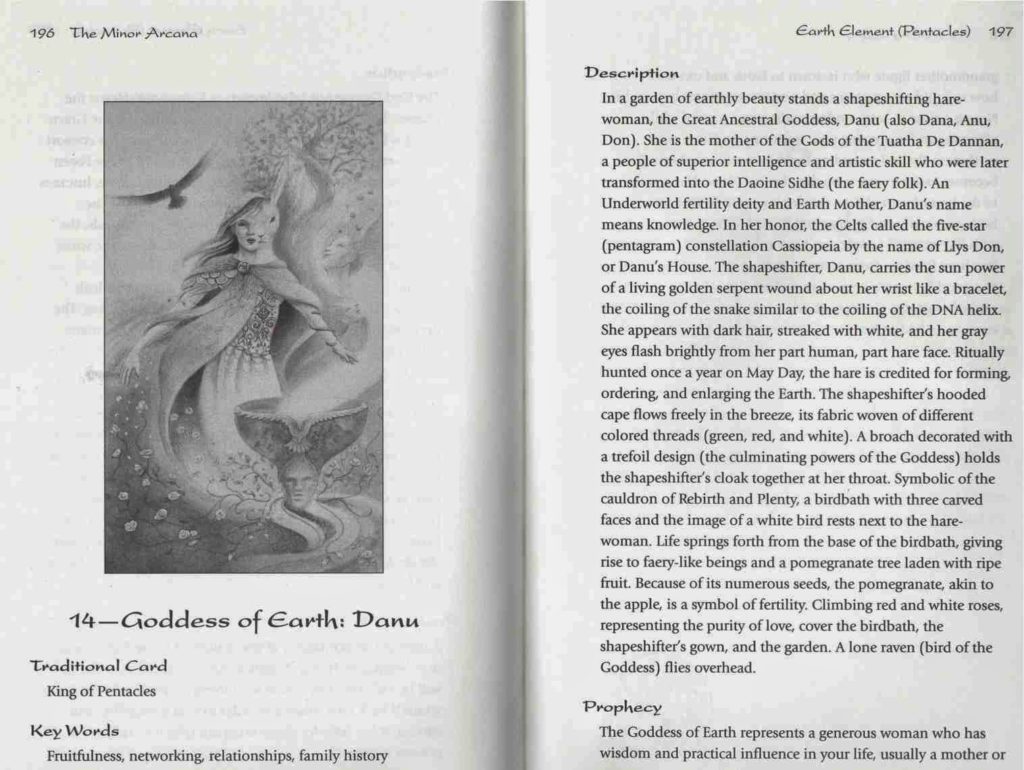
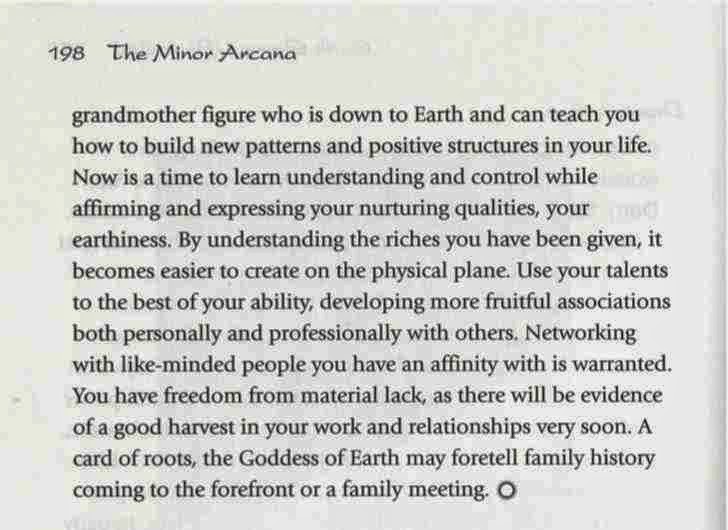
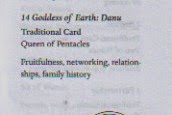
    To illustrate, I managed to procure a copy of the original accompanying book’s information about The Goddess of Earth (thank you Emma Sunerton-Burl) and provide it here purely to illustrate the quantity of work that has had to be omitted for the non-kit edition:

    This is the information provided for the Goddess of Earth from the original accompanying book.

    See? Massive difference in the quantity of information provided.  The answer? Somehow get your hands on the original accompanying book.

    So – in summary – I absolutely love the artwork and the concept behind this deck, but without the original accompanying book, you are left with lots of unanswered questions.  Come on Llewellyn – let people buy the accompanying book as a pdf download!! 😀

  • My Favourite Court | Chloe McCracken | Page of Pentacles

    Once upon a time, I decided to offer other Tarot bloggers the opportunity to come into the Kingdom of the Courts and have a chat about their favourite court card.  Chloe McCracken, who writes the TABItarot blog eloquently and possesses the stamina of a HORSE to post every DAY, was invited to be my first guest.

    But lo! The post failed to schedule.  Yes, I was going through a phase of trying to be organised and practical – very Queen of Pentacles – but failing miserably!

    So, I trawled back my posts to 2012 *oh the SHAME!* and share it with you on this Easter Monday!


    Take it away, Chloe!

    “When Ali asked me to write a post on my favourite Court card, it wasn’t my astrologically and age- and gender-related card that popped into my head, nor the one assigned to me by the Thoth system of decans.  (To find out about those, take a look at Ali’s posts…..)  Despite having written – here , here http://innerwhisperscouk.blogspot.co.uk/2010/10/bad-rep-well-deserved-knight-of-swords.html , here http://innerwhisperscouk.blogspot.co.uk/2010/10/bad-rep-well-deserved-queen-of-swords.html and here  – about the undeservedly bad reputation of the Swords court, it was none of them that I thought of.  Nor was it the Queen of Wands, who has been appearing to me a lot of late, and whose energy and characteristics I love.  Instead, it was the studious Page of Pentacles who clamoured to be heard and seen.

    Ali suggested I choose my favourite version of whichever Court card, and the one that sprang to mind was this one from the Ancestral Path Tarot (OOP, U.S. Games, 1996).   This was the first deck I chose for myself, after buying the Radiant Rider Waite (U.S. Games, 2005) for a tarot for beginners course I took at Mysteries in Covent Garden (London). Yet, looking at it again now, I was surprised that the Ancestral Path image – renamed Princess of Sacred Circles – doesn’t actually speak to what is in my mind when I think of this card!  She has been influenced by the Thoth version, and while I like the idea of pregnancy suggesting our own creative forces, and bringing something new into the world, it doesn’t really match with my main thoughts about the Page.

    You see, the first book I read about tarot was Rachel Pollack’s classic “78 Degrees of Wisdom” (HarperCollins, 1997, but first published in 1980!), which deeply influenced my understanding of tarot.  Digging it out again and turning to the suit of Pentacles, and the Page in particular, I found the roots of my enthusiasm and the mental picture I have of this card: “the Page need not refer to someone actually in school, but simply anyone approaching any activity with those qualities of fascination, of involvement, of caring less for rewards or social position than for the work itself.” (p. 239)  

    I love that sense of being an eternal student, ever fascinated with the world, constantly learning something new just for the joy of it, caught up in what you’re doing.  Not just learning through reading, but through trying and playing and doing again.  Rachel Pollack points out that the Page of Pentacles: “partakes of the suit’s practical nature by symbolising the actual work of the student, the study and scholarship, as compared to the inspiration symbolised by the Page of Cups.” (ibid)  Or, it might be added, compared to the rational thought processes and joy in reading of the Page of Swords!  So, looking through my decks, although the Page of Pentacles from Lisa Hunt’s Celtic Dragon Tarot (Llewellyn, 1999) comes closer to what I had in mind, it’s still not quite there.  

    More than just learning through doing and learning for fun, for me the Page of Pentacles is  also about learning something spiritual.  Once again, Rachel Pollack talks of this mystical side to the suit of Pentacles: “However far we may travel in spiritual meditations we must begin and return here – or lose ourselves in the process.” (ibid, p.232)  As she explains: “the natural world, because it carries a firmer reality than the other elements, because it does not lead so easily to confusion or misconception or ill use, opens the way to more mystic experience.” (ibid. 233)  I think that’s part of what I loved about the Ancestral Path take on the Page/Princess of Pentacles/Sacred Circles – her connection to spirit as well as her groundedness in her own body.  

    Not that you have to get all mystical about it.  For me, a perfect example of Page of Pentacles energy is found in practising yoga.  You always feel things a little differently, and are open to learning something new about your own body, your mind, what it is to be human, or the pose that you’re in.  It’s spiritual, without being woo-woo.  More simply, it’s just about bringing “beginner’s mind” to whatever you do.  

    In that sense, I love Joanna Powell-Colbert’s take on the Page of Pentacles/Child of Earth (Gaian Tarot, Llewellyn, 2011). Looking at anything, even an apple, as though you had never seen it before.  Feeling its smooth skin, smelling its crisp, fresh scent, enjoying the crunch as your teeth break through the peel, and the spray of yummy juice that squirts into your mouth before you’ve even finished biting off a chunk.  Still, it’s not my favourite version of this card.

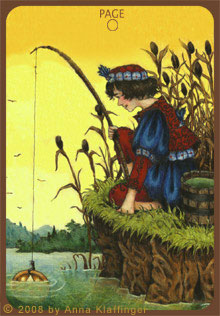
    After trawling through my decks, I realised that my absolute favourite depiction of the Page of Pentacles is from Anna K (self-published).   The sky is sunny and warm as our intrepid Page goes fishing.  S/he is doing something practical, and s/he might even get dinner out of it, but that really doesn’t matter – it’s just so amazingly interesting.  S/he looks intently at the bobbing pentacle, enjoying the feeling of the grass under foot, gazing at the sparkles in the water and the ripples from where the fishing line enters the water.  Engrossed in the moment, in the possibilities, s/he is learning a new skill, but doesn’t see it that way, just enjoying the day and the fun of doing something new.  Without even realising it, s/he slips into meditating on the nature of water, or the life cycle of fish, or the best way to sit so as not to get a dead leg.  It’s all good!  

    For me, learning tarot is like that, too.  No matter how long you’ve been playing with the cards, every reading, every draw, offers new possibilities.  The context is different every time depending on who you’re reading for, what spread you use, what deck you choose, what’s going on in your life.  Each day, we can see the cards with new eyes, and there’s the potential to spot something we never thought of before.  Yet, no matter how mystical the question, or how emotional, there is something grounded about using the cards.  Not just because they are (mostly) physical bits of card that we hold in our hands (though that helps).  But because they’re talking about our lives, here and now.  Even if we’re asking about the nature of the universe, it’s about how we can see and experience it in this moment.  We learn, we explore, we play, we experience.  Definitely Page of Pentacles 🙂


    Chloe McCracken writes the TABITarot blog, the Inner Whispers blog and is about to publish the Celtic Lenormand Oracle (artist: Will Worthington) 

  • As Easy as 1-2-3?

    I was recently contacted by a lovely person on Facebook, Arthur, who asked about Court cards and links to other cards that shared the same numbers….

    Traditionally, of course, Court cards are not numbered, but if they WERE numbered they could follow straight on from the Ten, resulting in:

    11 Page
    12 Knight
    13 Queen
    14 King

    If there IS a correlation between the Courts and their Major Arcana numbers, this would mean that:

    Pages have a link to XI Justice
    Knights have a link  XII The Hanged Man
    Queens link to XIII Death
    Kings link to XIV Temperance

    Honestly? If I sat for a long time, I would probably be able to come up with reasonable strands that could reasonably link those cards together, but my gut feeling is that it would be like hammering square pegs into round holes to force things to fit.

    Something else to consider, you COULD also knock off the first ‘1’ and say that:

    Pages link to I The Magician
    Knights link to II The High Priestess
    Queens link to III The Empress
    Kings link to IV The Emperor

    This feels a lot more attractive because of the Queens/Empress and Kings/Emperor links, but really does Knight energy have terribly much in common with your understanding and interpretation of The High Priestess? Do the nascent Pages have the mature, transformative power of The Magician?

    Possibly.

    BUT – what about abandoning the Major Arcana as the comparison and replacing it with the beginnings of the Minor Arcana?  After all, the Major Arcana originated from a different source to the Minor Arcana, so it makes more sense that the Courts would have common grounds with those beginner Minor cards.

    Pages would then link to their suit’s Ace
    Knights would then link to the Two
    Queens to the Three
    Kings to the Four

    When you make THESE associations, it feels much more natural – the potential offered by the Ace is also present in the little Page, the vacillations of the Knight can echo the dilemmas/choices present in the Two, the creative source of the Queen can be found in the Three and the stabilising force of the King can be recognised in the Four.

    What if you opted to use it ALL?!

    What if Pages shared a link between The Magician AND the Aces?
    Knights were linked between The High Priestess AND the Twos?
    Queens would share commonality with The Empress AND the Threes
    Kings would have common ground with The Emperor AND the Fours

    I think this could work, if you fancied the idea, but it would be vital to remember that just because an apple is red and so is a cherry it doesn’t make them the same thing at all!  They can have a common touching point in their colour and in that they are fruit, but they taste completely different.  And so it is with a Page and The Magician – they can link through their ‘potential’ as can the Page and the Ace, but they are not the same taste at all 😀

    My over-riding consideration for the accepting the validity of linking the Courts to other cards through the use of numbers is whether it makes sense for YOU.  What does it bring to YOUR understanding of the reading? How does it help YOUR client?  And can you apply the links consistently?

    I can see that if out that if a spread contained, for example, a lot of Twos AND a lot of Knights then it makes sense to drill down into whatever dichotomy your client faces.

    But enough of what *I* think, what do YOU think?

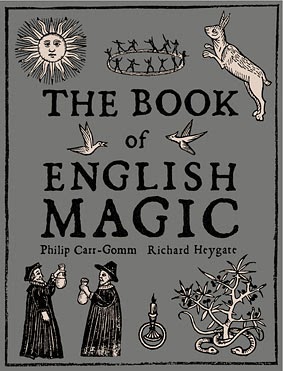
  • Significators | Philip and Stephanie Carr-Gomm | The Book of English Magic

    Click on image to visit site

    Since I started this blog, I have been ferreting out different ways to help you choose a significator for your client (or yourself!) in your Tarot work.

    Here’s another method:  Philip and Stephanie Carr Gomm have devised two sets of questions that help you (or your querent) work out which suit and which rank best suits your personality.
    I reproduce them here with kind permission from the Carr-Gomms:
    Finding the SUIT that best applies to you:
    A – I’m an intuitive, enthusiastic person, who loves starting projects and tends to have ten new ideas before breakfast. I’m not so good at finishing things, though, and I can lack focus because I’m interested in so many things.
    B – I’m a sensitive, emotional person. I feel very deeply, and can cry easily. My heart goes out to people and animals who are suffering, and I feel drawn to the arts and the healing professions.
    C – I spend a lot of my time thinking and analysing. Some might call me an intellectual, and I can be accused of having my head in the clouds. I sometimes feel detached from everyday events and can find it hard to express my feelings.
    D – I’m a practical person – I just like to get to work and do things, rather than endlessly theorising about them or talking about them. I’m good with my hands and like making people feel at home.
    If you choose A – you’re a WAND, B – you’re a CUP,  C – you’re a SWORD and D – you’re a PENTACLE
    Congratulations! You’re halfway there!
    Now you have to find the RANK that best applies to you:
    A. I feel young and innocent most of the time. Sometimes this makes me feel uncomfortable or embarrassed when I’m in the company of other adults who seem so ‘grown-up’. I feel as if I have so much potential that I’m only beginning to explore.
    B. I like to get on with things. I want to be of use to the world, but I sometimes jump into things too impulsively. It makes me feel clumsy sometimes, but I prefer action to too much thinking.
    C. I feel quite mature and aware of myself and what I’m doing in the world. I value creativity and compassion and like to nurture these qualities in myself and those around me.
    D. I feel in charge of myself and my life, and am considered an authority figure by some people. I have accomplished a good deal and try to be socially responsible.
    If you choose A – you’re a PAGE/PRINCESS, B – you’re a KNIGHT, C- you’re a QUEEN and D – you’re a KING.
    Isn’t that just THE most elegant, straightforward way to sort out the Court Card that best represents you?
    To find out more:
    a) The Questionnaire is on pp456-458 in The Book of English Magic
    b) Thumbnail personality sketches on pp 458 – 465 of the same book.
    c)  Delve into the large book that accompanies The DruidCraft Tarot.
    My own insight into this method is that if you answer the questions WITH YOUR TAROT QUERY IN MIND, you could end up with different Courts representing you for different scenarios.   However, if you answer the questions keeping in mind how you see yourself generally, you will come up with a Court Card significator to represent you in ALL instances.
    What do you think of this method of selecting a Significator? 
  • Philip and Stephanie Carr-Gomm | Interview

    Whose favourite Druidcraft Tarot card
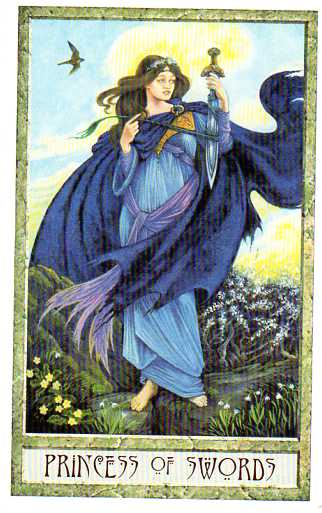
    is this, The Princess of Swords?

    Hot on the heels of the Carr-Gomms’ highly successful Druidcraft video-conference sessions  hosted by Linda Marson at GlobaI Spiritual Studies, I was very honoured when they both took time out of their busy schedules to answer some questions for Tarot Thrones about the Druidcraft’s wonderful Courts.

    Me (A):  First of all – thank you so much for agreeing to be interviewed for my blog!  You are a Tarot duo that I have admired ever since I laid eyes on the DruidCraft 🙂


    Philip and Stephanie (P&S) “Thank you! And now we can start a mutual admiration society because we’ve discovered your blog and love the way you’ve given it the focus of the Court cards, which – as you know – is of great interest to us and starts off our book and the training we’ve developed that we’re calling Integrative Tarot.”  


    (Ali: more on this powerful Integrative method in a future post!)

    A: Quite often the Court Card section of a Tarot deck can be a real disappointment: very little thought or symbolism seems to be included in the cards.  Not so with the Courts of the DruidCraft who are exquisitely detailed characters both in the artwork and on the written page.  You and Stephanie put great emphasis on the Court Arcana with the Druidcraft – what prompted you to do that?”
    P&S: “The Hanged Man perspective! Looking at things in a completely different way – turning things upside down and inside out, certainly helped. When we worked on the DruidCraft Tarot, after looking at hundreds of decks, dozens of books, we noticed exactly what you have said. It’s as if the authors and artists focus on the amazing Majors first, then the pips, and by the time they reach the courts they’re exhausted and don’t seem to give the same level of attention to them. What convinced us was not turning things around and saying – “if everyone finishes with them, let’s start with them,” as a sort of attempt to be different or unique. No – it was because we realised that the Courts represent the Tarot’s own special typology – just as astrology has twelve, the enneagram nine types, and so on, the Tarot has sixteen. And when I remembered that the most commonly used personality typing system in psychology is a 16 fold one – the MBTI – that clinched it for me, particularly since the MBTI evolved out of Jung’s four-fold typology which correlates so beautifully with the principles of Druidcraft. Later I discovered in Mary Greer & Tom Little’s book that various others had made correlations, which was fantastic.

    “But the story goes on, because at that time I was working on the book in New Zealand. Steph was in Sussex, Will was in Manchester, the publisher’s art director was in London. Steph and I were skyping about the project, and emails were whizzing between all of us. A friend in NZ had trained with a teacher called Glynn Braddy who used the four elements as a key part of his teachings. This friend talked at length to me about his teachings and in particular about the different facial and body types associated with the elements, explaining that predominantly airy people had thin faces, aquiline noses, and piercing blue or grey eyes, while Earthy types were more likely to be stocky, with round flat faces,and so on. I relayed this information to Will, and so we have very consciously delineated differences between the Court figures of each suit. 

    “Incidentally, Glynn Braddy seems to have influenced a number of people, including Stuart Wilde, and an internet search will reveal comments such as:

    “Glynn Braddy, an Australian, was another lecturer who was particularly brilliant and of course controversial (almost all the greats are). Some considered him a metaphysical genius with his ability to combine science, nutrition, philosophy and metaphysics in his teachings. His mind traveled over a vast landscape. I use the past tense because I don’t think he teaches anymore but I attended a few of his workshops and they were in a league of their own. I use the information I learnt from Glynn on a daily basis.” James Wild. Leon Davis has produced a novel based on his four element teachings: ‘The Seasons Within’  as has Geof Spalding with his book The 33rd Sage .

    A: I e-mail interviewed  Mary K Greer (for my blog) and we spoke about the Personality Profiling that she and her colleagues did in her wonderful Understanding The Tarot Court and she said that they couldn’t agree on how to allocate the 16 types to match the 16 personalities of the Tarot Courts.  Do you think that this is because the Courts aren’t people, but facets of people’s character?”
    P&S “No I don’t think so. When you go into the subject of personality profiling and typology it becomes really quite complex and subtle – as it should do! After all we’re all quite complex contradictory creatures! And so I think it would take a lot of work to refine our understanding of the correlations between the MBTI types and the Tarot types, and maybe it isn’t an exact correlation anyway. But I think this requires more research and it’s rather nice to know that not everything has been discovered and worked out! I hope one day someone with a few years on their hands – perhaps a psychology graduate with a real interest in typology – will tackle this and let us all know their findings.”
    A: “Yes, that would be wonderful!

    “I very much enjoyed the two sessions that you and Stephanie did with Linda Marson’s Global Spiritual Studies and was impressed by the two sets of questions that you had developed to help people work out which suit and rank best represented them.  Do you think that one’s answers (and therefore Court personality card) to these questions will change, depending on the nature of the question that the sitter is contemplating?”  


    (Ali:  Those two sets of questions will go up here on  m’blog, with full permission from P&S next week!)

    P&S “That’s an interesting idea! The questionnaire as you know is very basic – but despite that it seems to often be quite accurate. I tried it last night on my mother and daughter – both Geminis – and they absolutely refused to go for one answer in each section. It took ages of saying ‘Yes but if I put a gun to your head which would you choose?’ before we could work out their types and I think they got a good fit. Your idea suggests that if – for example – you were struggling with an emotionally upsetting issue and you were feeling particularly vulnerable, you would be more likely to choose a statement that related you to a Cups Court, while if a day or so later you were wrestling with a practical or financial issue you’d be more likely to select a Pentacles court. I guess that’s certainly a possibility. One way around that would be to do the questionnaire separate from any reading, and to do it several times over a few months. If you consistently came up with the same Court I think it would be pretty accurate. “
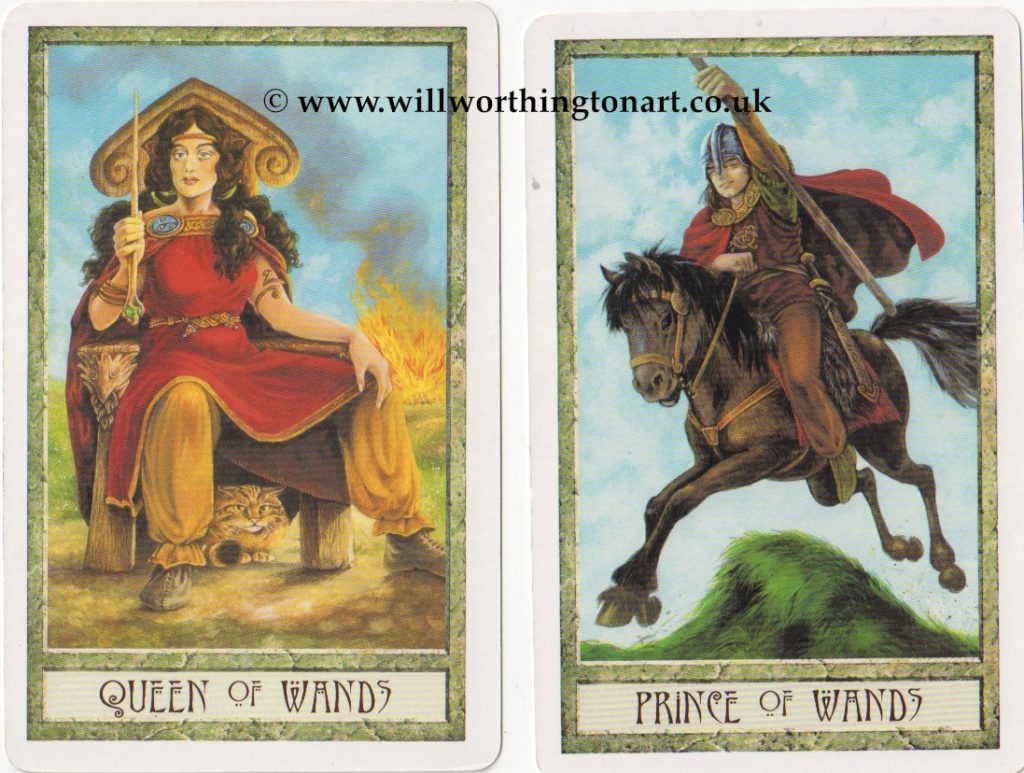
    A: “My favourite card is the Queen of Wands – I love the expression on her face, the billowing fire, her pose, the cat beneath her throne…..THAT wand!  Which Court personality card is your personal favourite – and why?”
    Philip: “I love the Princess of Swords. In the original paintings the egg tempera blues of her dress and cloak are just stunning!”
    Stephanie: “I really like the Prince of Wands – he looks so joyful bounding along on his horse, over rolling waves of grass, he’s just having so much fun!”


    My favourite DruidCraft court card alongside Stephanie’s favourite!
    A: “We’ve had to wait a very long time for dedicated DruidCraft workshops to materialise – will you be running any more?”
    P&S:“We weren’t sure how a webinar would go – but we found that it’s a great medium to teach Tarot because the cards are a visual tool and therefore a visual medium like a computer screen is perfectly suited. And in addition, being able to interact with participants AND have it all recorded so students can go back over the material later is fantastic. So yes we’ll be doing more I reckon!”
    A: “I’m very interested in the creative process between deck authors and deck artists, can you tell me how you and Will Worthington went about creating these expressive cards? Did you send very detailed remits as to what you wanted to see in the images or did Will have a lot of creative leeway?”
    P&S: “For most we sent quite detailed briefs, but for some we said to Will ‘Why don’t you go ahead and just see what comes to you, as long as you have these two or three symbols/elements in there.’ Most of the time we agreed, but occasionally we struggled together but that’s good – that shows creativity is taking place. Giving birth isn’t easy after all, is it? It was definitely a joint process, for instance – ‘Death’ which we absolutely love, was our vision, which Will executed brilliantly. ‘The Wheel’ on the other hand was Will’s inspiration – and it’s fantastic, one of our favourite images!”

    A: Thank you so much to Philip and Stephanie for taking the time to answer all these questions! I hope that your interest is piqued by the Integrative Tarot style mentioned.  You can find out about the 16 personality types in much more detail in Philip’s book: The Book of English Magic, pp 45- 465


    See the full range of books by Philip Carr-Gomm:  
    http://philipcarrgomm.druidry.org/books.htm
    Read Philip’s blog:  http://philipcarrgomm.wordpress.com
    Find out more about OBOD:   www.druidry.org

  • The Queen of Cups rises to the occasion!

    So, I am hideously casual with my jewellery.  I have lost count of the number of times I have been sound asleep in bed only to bolt awake and upright thinking: “WHERE IS MY PENDANT?! I HAVEN’T SEEN IT IN YEARS!” and yes, it all happens in those horrible shouty capital letters.

    Well, dear reader, I had one of those moments with my Big Gold Earrings.  One of the perks of living with someone who travels the world is that they tend to bring you back amazing presents from odd places – I’ve had kimonos from Japan, cowboy boots from Texas, gold from The Gulf and Chlamydia from Brazil…..

    Yeah, I’m half joking.

    Amongst some of the spoils of war  trade were a pair of gold earrings.  They are very large, so they are called My Big Gold Earrings.

    I remembered putting them out on the bed as I debated with myself what I should wear to the ballet in Glasgow.  But since I was travelling to the theatre by train, I opted for something less conspicuous.

    And that was the last that I saw them.

    Cut to two weeks ago and I had the ‘OH MY GOD WHERE ARE MY BIG GOLD EARRINGS?!’ moment at about 5am.  So strong was the feeling that they were Lost and Gone Forever, that I got out of bed and went hunting for them.

    Again, this is the sort of thing you can do when your other half is somewhere else in the world for long periods of time.

    Nero the dog lifted his head from his basket, sighed and humphed himself into a comfortable position.  I on the other hand had every drawer opened and cupboard turned inside out.  No sign of the earrings.

    This went on for DAYS.

    My mother simply rolled her eyes when I telephoned to ask her whether I had maybe left them at her house.  Like I say, I am a bit casual with my jewellery and the last thing that I’d left there was an engagement ring.  Which SHE had given me.  Which I didn’t notice I wasn’t wearing until mother telephoned me to ask where it was.  When she had it all the time back on her finger.  My mother is sneaky and emotionally manipulative.  And mostly right.

    I was so fed up racking my brains as to where the earrings might be that I drew a Tarot card.  ‘Where on EARTH can I find my earrings.  Just give me a visual clue, ok?’

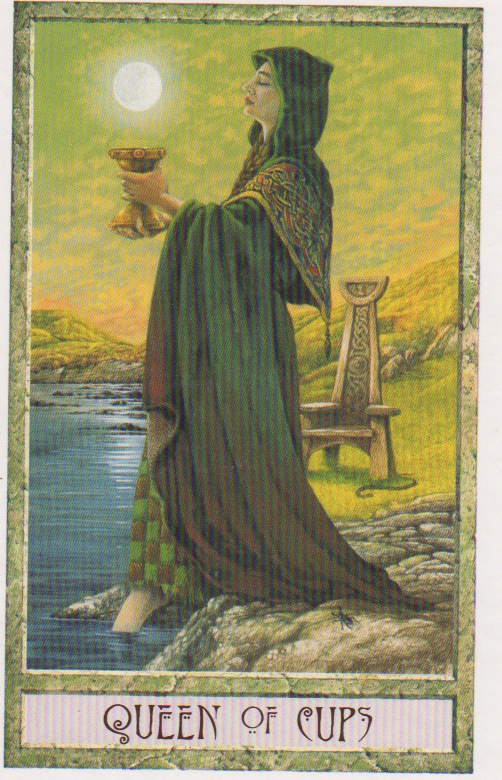
    And the card that I drew was this:

    Since I tend to see my mother as The Queen of Cups, I idly wondered whether she really DID have the earrings and was Teaching Me A Lesson.

    Some other thoughts:

    They are near a chair
    Near some kind of snake
    In a cup
    Near a bright light
    In my outdoors jacket with the hood

    A few more days passed and I had to go out in the car.  ‘Oh look – cup holders,’ thought I. ‘That’s sort of like the Queen of Cups and her cup,  I wonder if the earrings are there.’

    And they were.

    Have you used a Tarot card – more specifically a Court Card – to help you find a lost item?

  • Little White Newsletter Recommendations – Kyle Gray : March 2014

    I send out a monthly newsletter from Tarot Thrones called The Little White Newsletter.  

    Every month someone in the Tarot biz makes a recommendation on a deck and/or book that they want to share with their Tarot peers.  This month, author of the forthcoming book Angel Prayers and BIG Tarot fan (and hugely bendy Yoga chappie!), Kyle Gray sent me so much lovely copy, that I couldn’t bear to cut it down to a couple of sentences! 

    For those of you who are regular Inmates Readers at Tarot Thrones and who haven’t signed up yet for my newsletter, you can do so here:

    ….and if you clicked through on the link in Kyle’s recommendations and haven’t visited Tarot Thrones before…well hello there!  *waves and offers a plate of biscuits*

    Come and read Kyle’s full comments!

    “I’m absolutely privileged to be
    writing my recommendation for This Game of Thrones blog because It is
    an excellent resource of information. I have been following the blog
    for several months now and not only has the information helped my
    personal practice, it’s made me laugh too.
    “There’s one Tarot book I’ve not
    been able to live without. I remember getting a copy about 9 years
    ago and being really excited that I’d finally have a HOW TO guide
    on being a professional reader. The book goes beyond what I expected
    of it and it is constantly by my bed to this day. In fact I’ve had
    several copies of it because I’ve given it to others who are just
    starting on the journey of reading cards for a living or need some
    pointers in there own established business.
    “The book I’m referring to is
    Professional Tarot: The Business of Reading, Consulting &
    Teaching by Christine Jette. It went out for print for a few years
    but after having a quick look on Amazon, I see that there are new copies
    available! Woo-hoo!
    “Whether some people like to admit it or
    not, Tarot reading is indeed a business. I know it can be part of our
    spiritual practice, our desire to help others and can be a real healing
    experience but like everyone – we have bills to pay. When I first
    got this book I had the habit of doing readings for free, being
    hooked onto by friends who I had read for and maybe putting myself
    into situations that could have been trickier than I thought (house calls would be a prime example).
    “Christine Jette has a wealth of
    knowledge and comes from a nursing background. I love how she helps
    you deal with a client holistically rather than just read their cards
    and send them on their way.  For example she encourages you to have a
    list of numbers like A.A, Al-Anon, Samaritans and anything else that
    might come in handy. 
    “She also deals with more challenging subjects; in
    fact one of my favourite sections is called ‘ARE YOU FUNNY ABOUT
    MONEY?’. Christine helps you create a wholly professional mind and practice but also get that spiritual buzz from it all at the same time.
    This book is my personal resource of information and guidance –
    even 10 years after reading it and many successful years in business.
    It’s great!
    “If you’re a tarot reader but you’ve
    been sucked into being emotionally drained, you’re not making as
    much as you had hoped or you just want to feel a little bit organised
    – this book is for you. She also devises a plan on how you can
    teach the cards, what a perfect way to get organised. I love this
    book so much!
    “The old faithful tarot deck I have to
    recommend is the Thoth Deck by Aleister Crowley and Lady Frieda
    Harris. I remember the first time I saw this deck – I was on the
    way to do a ‘psychic party’ with a friend. We had been going to
    do house calls together for quite sometime but I had never even asked
    to see her cards before. My friend said: “they’re in my bag, have a
    look” and I started gliding through the deck filled with rich
    imagery and, well, let’s just say to-the-point messages!
    “I was instantly mesmerised and decided I
    needed to get a pack. After doing some research I learned about
    Crowley and his madness. I was overwhelmed and to put it honestly, it freaked the hell out of me! The deck lay in my bedroom and I kept dreaming
    about it. I was petrified. I remember telling my friend about my experience and her guidance has stayed with me ever since.
    She said: “Kyle, it’s a deck of cards, the power isn’t inside
    them, it’s inside you!” and I realised then that I was just being
    silly, that the deck was a tool for my focus, to trigger my intuition.
    “A few years passed before I really
    got into the deck but ever since I tucked into them one night with
    great success I’ve never looked back. I think I was just young and
    like everyone had worried about the idea of Crowley and his bad
    press. Maybe I was worried I was going to be ‘cursed’ or have a
    meeting with ‘Satan’ but I knew then I wasn’t being truthful to
    who I am. For years I’ve told people that only good exists and it’s
    just FEAR we come up against.  Well, this deck helped me move through and
    let go some of my own.
    “Since making my peace with the deck I
    have become interested in Crowley’s and Harris’s work together.  I believe this deck reflects Crowley’s years of going in and out of the light and
    darkness – something we all go through in life. When using the
    Thoth deck you are able to see people’s strength and challenges but
    more importantly guide them through it with a grounded, down to earth
    foundation. The cards remove the ‘fluff’ and sugar-coatings that
    other decks can put on certain cards so that you can point people in
    the right direction without having to mumble your words or explain a
    card – they’re real life!
    Kyle Gray

    Find out more about Kyle here: