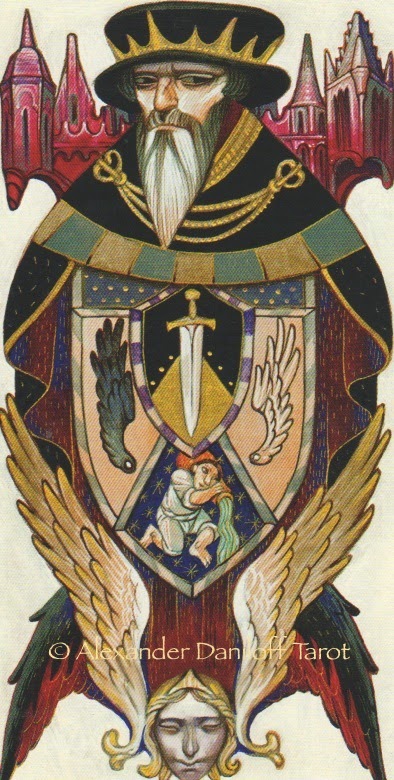
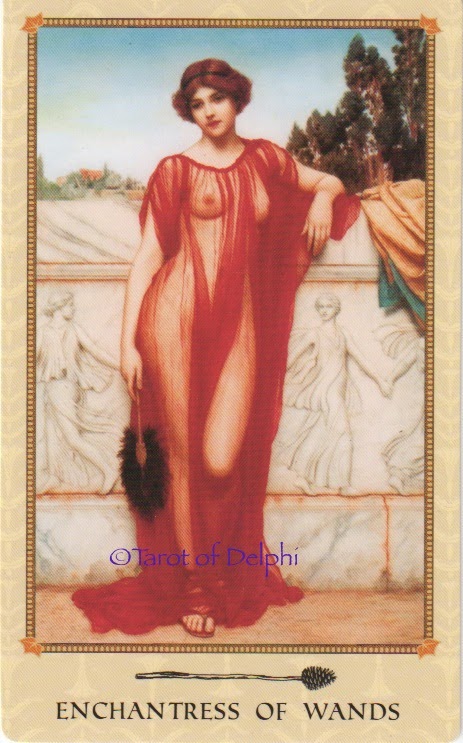
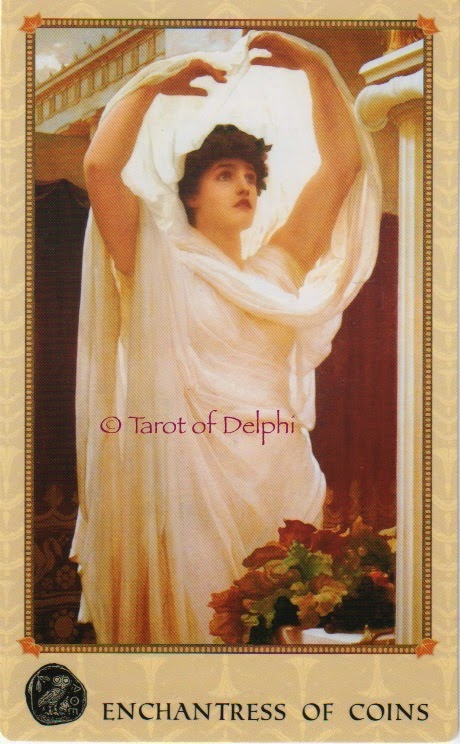
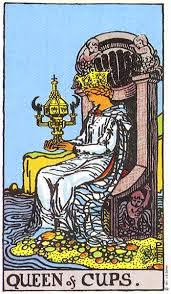
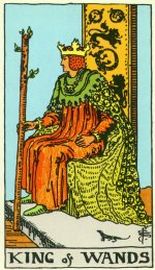
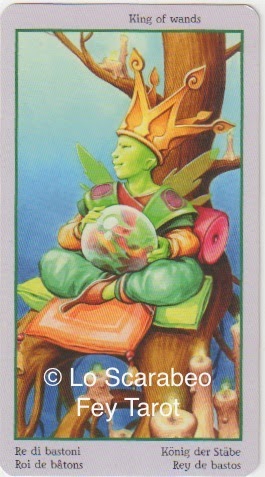
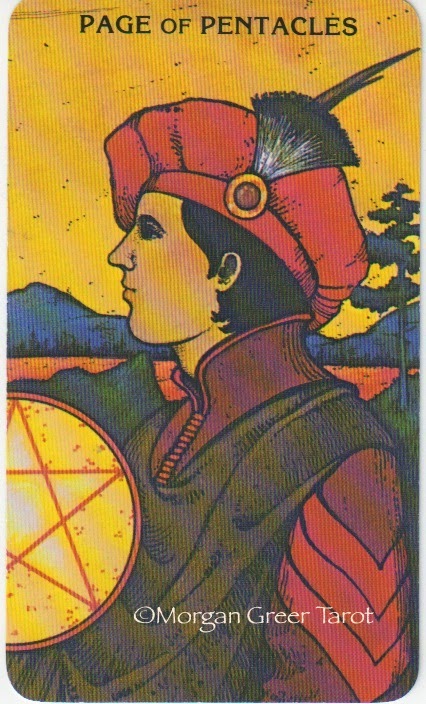
A long time ago, I promised to show you the Court Cards from the Dame Fortune’s Tarot Wheel deck (by Paul Huson) because they are REALLY interesting: They are all named after well-known characters from classical literature and the Bible.
I know. CLASSICAL LITERATURE!! THE BIBLE!!! Here on m’blog!!!!
Before we meet those Court families, I thought that it made good sense to take a look at just why these cards bear the names that they do.
*does the wobbly hands time thing*
deck of playing cards. Two groups of names were common; one that
became known as the Paris pattern and the other, the Rouen pattern. These patterns, or lists of names, have quite a bit of overlap and it is the Paris pattern that we are interested in today because this is the design that influenced early Tarot decks, such as Etteilla’s Tarot in the 1700s. And it is Etteilla’s deck that forms the basis for The Dame Fortune’s Tarot Wheel.
Maccabeus *
Judah Maccabee
Although we’re not talking about them today, here are the famous stars of the Rouen Pattern.
Hearts Spades Diamonds Clubs
Kings Alexander David Caesar Charles
Queens Rachel Pallas Argine Judith
Knaves La Hire Hector Ogier Judah Maccabee **
Judas Maccabeus
You will have noted, because I know that you are a clever and discriminating personage, that there is a Tarot rank missing – the Knights are not included in either the Paris or Rouen Patterns. There’s nothing sinister about this, just that in ordinary playing card decks (where these patterns come from) there were only the three ranks of King, Queen and Knave. We’ll be talking about this again when we get on to the Sola Busca Tarot in a week or so, because it’s contrary! I know, it’s almost like I’ve PLANNED these posts.
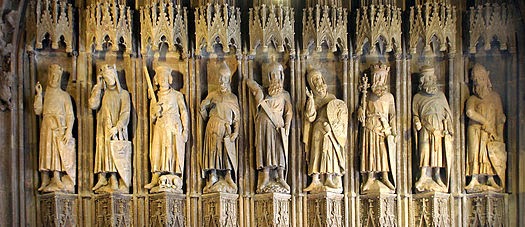 |
| 13th century ‘Nine Good Heroes’ (City Hall, Cologne) |
It was also suggested to me that the Nine Worthies (Neuf Preux) play a role in the names selected for the Paris and Rouen patterns.
These Worthies were famed rulers of the Christian, Jewish and Pagan worlds and were first mentioned in a chanson de geste (a type of epic poem), ‘Voeux du Paon’ (‘The Vows of the Peacock’) by Jaques de Longuyon around 1312 – all about chivalry.
It seems likely that similar chivalric tales (which were all the rage) influenced the naming of the cards in both the Paris and Rouen patterns.
Pagan Hector, Alexander and Caesar
* Edit: Paul Huson very kindly commented on this blog post and provided the following correction: “Judas Maccabeus was one of the Nine Worthies but his name was never attached to the Knave of Clubs. From 1490 the Knave in both Rouen and Paris patterns bore the name “Lancelot” (of Camelot fame) although the name “Roland,” another name from French legend, was briefly tried but didn’t last”.

Stop being confused by court cards! Start being excited by the possibilities! Become a court card adventurer along with me 🙂 The Tarot’s Court Cards are my specialist area. They talk to me. Not LITERALLY though ….